Low Vision Aids for Seniors: Magnifiers, Electronic Readers and Who Helps Pay in Canada
How to choose low vision aids for an aging parent in Canada: handheld and stand magnifiers, portable electronic magnifiers and desktop video magnifiers, 2026 prices, the brands to know, and Ontario ADP and CRA help.
By Jonathan Kennedy · Last reviewed October 2026
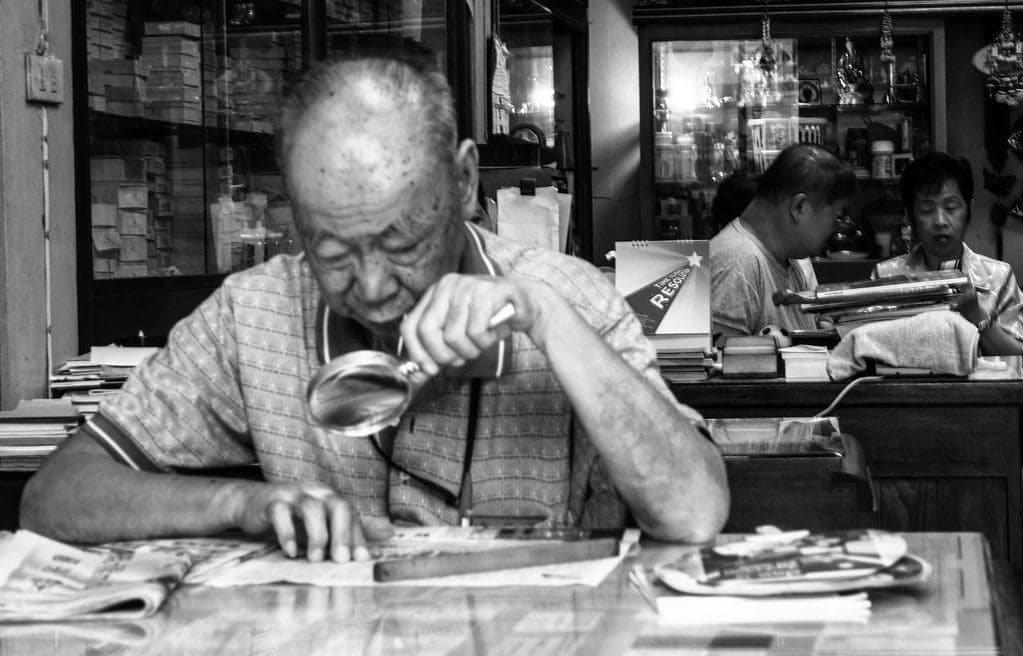
Photo: Georgie Pauwels, CC BY 2.0
On this page (6 sections)
The right low vision aid depends on what your parent wants to do again: a handheld or stand magnifier (about $15 to $250 in 2026) for labels and short reading, a portable electronic magnifier (about $300 to $1,200) for mail and menus on the go, or a desktop video magnifier (CCTV, about $1,800 to $4,500) for reading books and letters at home. Start with a low vision assessment, because it decides which aid works and opens the door to Ontario's ADP funding.
Maybe your parent has stopped reading the paper, struggles with pill bottles, or asks you to read the mail out loud. Losing reading is about more than books; it touches bills, medications and independence. The right aid often brings a lot of that back.
Do this next:
- Compare vision aids with prices, magnification and the brands Canadian suppliers carry.
- Book a low vision assessment with one of the low vision services we list, before buying anything over a few hundred dollars.
- Fix the lighting first. A bright, glare-free task lamp is often the cheapest improvement of all.
Which low vision aid fits which task?
| Aid | Typical cost (2026) | Best for | Trade-off |
|---|---|---|---|
| Handheld magnifier | $15 to $250 | Labels, price tags, short notes | Needs a steady hand |
| Stand magnifier | $15 to $250 | Reading at a table, shaky hands | Sits flat on the page |
| Portable electronic magnifier | $300 to $1,200 | Mail, menus, reading on the go | Small screen, needs charging |
| Desktop video magnifier (CCTV) | $1,800 to $4,500 | Books, letters, writing cheques | Stays in one place |
Electronic magnifiers can also change contrast, for example white text on black, which many people with macular degeneration find easier to read.
Should you start with a low vision assessment?
Yes, for anything beyond a basic magnifier. A low vision optometrist checks which magnification and lighting work for your parent's eyes and the tasks they care about. It also prevents the most common waste: an expensive device that's too strong, too weak or too hard to use.
Our take: Don't buy an electronic magnifier from a catalogue. Ask to try two or three models at home or in a clinic. The one your parent finds easiest to switch on is the one they'll use.
Which low vision brands should you know?
| Brand | Known for |
|---|---|
| HumanWare | Canadian company (Drummondville, Quebec), portable and desktop magnifiers up to about 45x |
| Eschenbach | Optical handheld and stand magnifiers, up to about 12.5x |
| Enhanced Vision | Desktop video magnifiers, up to about 73x |
| Optelec | Electronic magnifiers, available through CNIB, up to about 30x |
| Freedom Scientific | Desktop magnifiers and software, up to about 64x |
Is a premium desktop magnifier worth it?
For a parent who wants to keep reading books, writing letters or doing crosswords every day, yes. A large screen, a movable reading table and good contrast settings make long reading possible again. For labels and the odd letter, a portable magnifier does the job at a fraction of the price.
Who helps pay for low vision aids in Canada?
- Ontario: the Assistive Devices Program pays 75% of the cost of many visual aids, and a set amount for optical aids, for people with long-term low vision (for example, 20/70 or less in the better eye). An ADP-registered examiner does the assessment.
- Tax: large print-on-screen devices are an eligible medical expense with a prescription (CRA).
- CNIB: offers low vision services and support across Canada, and can help your parent learn to use a new device.
How do you help a parent who resists?
Many seniors don't want to admit their sight has changed. Start with one task they miss, such as reading a grandchild's card, and solve that. Small wins make it easier to say yes to the next aid.
Frequently asked questions
What are the best low vision aids for seniors?
It depends on the task. A handheld or stand magnifier suits labels and short reading, a portable electronic magnifier suits mail and menus, and a desktop video magnifier suits books and letters at home. A low vision assessment shows which one works best.
How much does an electronic magnifier cost in Canada?
About $300 to $1,200 for a portable electronic magnifier and about $1,800 to $4,500 for a desktop video magnifier (CCTV) in 2026. Handheld and stand optical magnifiers cost about $15 to $250.
Does Ontario's ADP cover magnifiers?
Yes, for people with long-term low vision assessed by an ADP-registered examiner. ADP pays 75% of the cost of many visual aids and a set amount for optical aids.
Are low vision aids tax deductible in Canada?
Large print-on-screen devices are an eligible medical expense on the tax return with a prescription, according to the CRA. Keep the prescription and receipt.
Last reviewed October 2026. We keep our guides current as costs, programs, and options change.
Need personal guidance?
Our advisors can help you apply this to your family, free and confidential.