Raised Toilet Seat vs Commode vs Safety Frame: Which One Does Your Parent Need?
How to choose between a raised toilet seat, a seat with arms, a toilet safety frame, a 3-in-1 commode and a comfort-height toilet for an aging parent, with 2026 prices, fitting tips and who helps pay in Canada.
By Jonathan Kennedy · Last reviewed October 2026
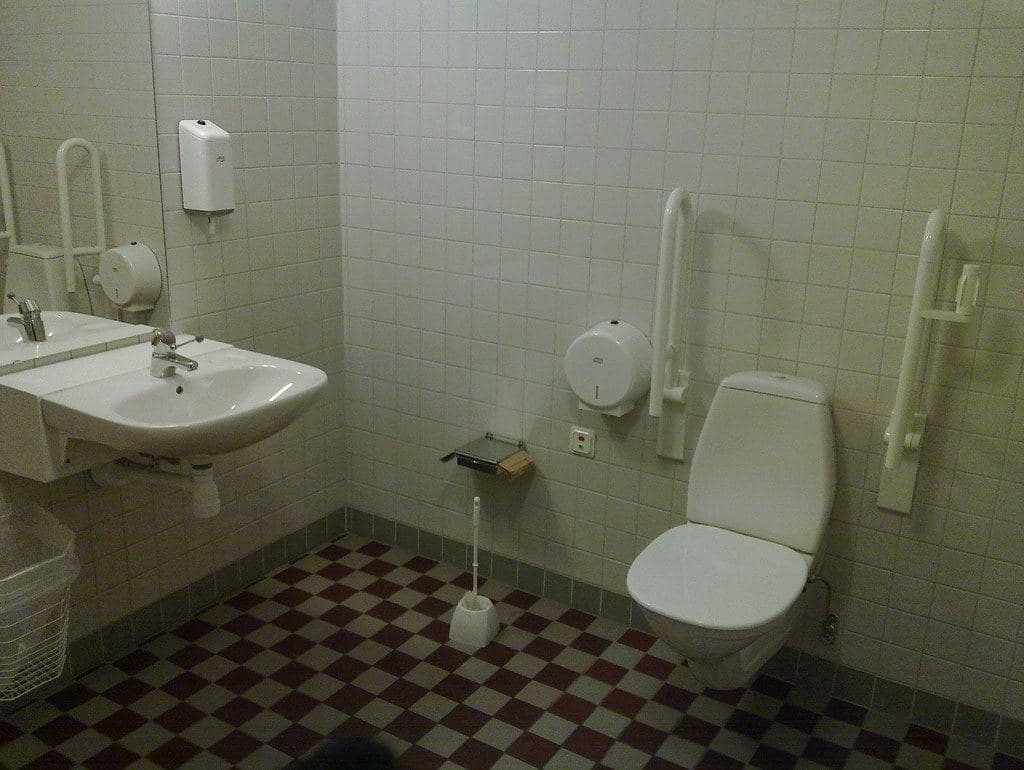
Photo: blondinrikard, CC BY 2.0
On this page (7 sections)
For most seniors who struggle to get up from the toilet, a raised toilet seat with arms (about $30 to $120 in 2026) solves it in one step and installs in minutes. A 3-in-1 commode (about $60 to $250) is the better buy when your parent also needs a toilet by the bed at night, and a comfort-height toilet (about $300 to $700 installed) is the lasting fix if you're renovating anyway. Bathroom aids like these are an eligible medical expense with a prescription (CRA).
Maybe your parent has started gripping the towel bar to stand up, or you've heard about a near fall in the bathroom. It's one of the most private parts of the day, so it's also one of the hardest to talk about. The good news: this is one of the cheapest, quickest safety fixes in the whole house.
Do this next:
- Compare raised toilet seats, frames and commodes with prices and the brands Canadian stores carry.
- Pair it with a grab bar beside the toilet. Our grab bar guide shows where to put it.
- Ask an occupational therapist or the medical supply store to check the height before you buy, especially after a hip or knee replacement.
Which toilet aid fits which problem?
Start from what's actually hard for your parent: sitting down, standing up, or getting to the bathroom in time.
| Option | What it solves | Typical cost (2026) | Watch for |
|---|---|---|---|
| Raised toilet seat | Too low to stand up from | $30 to $120 | Must lock firmly to the bowl |
| Raised seat with arms | Too low, and needs something to push up on | Toward the top of that range | Arms that flex or loosen |
| Toilet safety frame | Needs arms, keeps the regular seat | $60 to $250 | Width around the toilet |
| 3-in-1 commode | Can't get to the bathroom at night, or needs height and arms | $60 to $250 | Weight rating, a lid on the pail |
| Comfort-height toilet | A permanent fix | $300 to $700 installed | Renovation timing |
| Bidet seat | Trouble wiping after surgery or with arthritis | $100 to $1,500 | Needs an outlet for heated models |
Raised toilet seat with arms or without?
Choose with arms if your parent pushes off the counter, the sink or the towel bar to stand. Arms give two solid push points right where they're needed. A plain raised seat is enough for someone who can stand on their own but finds a standard toilet too low, for example while a new hip heals.
Most raised seats add about 3.5 to 5 inches of height. Your parent's knees should sit level with or slightly below their hips when seated.
Our take: For a parent recovering from hip or knee surgery, buy the locking raised seat with arms. It costs a little more than the bare seat, and it's the version that gets used.
When is a commode the better choice?
A 3-in-1 commode works three ways: as a bedside toilet, as a raised seat with arms over the toilet, and as a safety frame. That makes it the better buy when:
- Night-time trips to the bathroom are the real risk.
- Your parent is recovering and can't walk far yet.
- You want one item that keeps working as needs change.
The trade-off is the pail. Someone has to empty and clean it, so be honest about who that will be, especially if a home care worker visits only once a day.
Is a comfort-height toilet worth it?
If a bathroom renovation is planned, yes. A comfort-height toilet (about 16.5 to 17 inches to the seat, against roughly 15 inches for a standard bowl) looks like any other toilet and never needs to be installed or removed. It won't replace arms or a grab bar, so plan both into the renovation.
What should you check before buying?
- Fit: round or elongated bowl, and whether the seat locks to that shape.
- Weight rating: many standard seats are rated around 300 lb. Ask for the bariatric version if needed.
- Height: measure from floor to the back of your parent's knee.
- Cleaning: fewer seams and a removable lid make daily cleaning easier.
- Space: a frame or commode needs room on both sides of the toilet.
Who helps pay for toilet aids in Canada?
Usually your parent pays, because the price is low. A few routes can help:
- Tax: bathroom aids are an eligible medical expense on the tax return when prescribed by a medical practitioner (CRA).
- Ontario: the Assistive Devices Program doesn't cover raised toilet seats or commodes, so plan to pay privately.
- Alberta: Alberta Aids to Daily Living can cover raised toilet seats and commodes for people who qualify.
- After hospital: ask the discharge team about short-term loans; many communities lend these for free or a small fee.
How do you bring it up with a parent?
Keep it practical and about comfort, not about falling. "The toilet's really low in here, this makes it easier on your knees" lands better than a talk about safety. Put it in, let your parent try it for a week, and ask how it feels.
Frequently asked questions
Is a raised toilet seat with arms better for the elderly?
Usually, yes. The arms give two solid push points to sit down and stand up, which is what most seniors need. A plain raised seat is enough for someone who stands without help but finds a standard toilet too low.
How much does a raised toilet seat cost in Canada?
About $30 to $120 in 2026, with models with arms toward the top of that range. A toilet safety frame or a 3-in-1 commode costs about $60 to $250, and a comfort-height toilet about $300 to $700 installed.
What is the difference between a commode and a raised toilet seat?
A raised toilet seat sits on the existing toilet to add height. A 3-in-1 commode is a frame with a seat and pail that can be used by the bed, over the toilet as a raised seat with arms, or as a safety frame.
Does Ontario's Assistive Devices Program cover raised toilet seats?
No. Ontario's ADP doesn't cover raised toilet seats or commodes. With a prescription, they are an eligible medical expense on the tax return, and Alberta Aids to Daily Living can cover them in Alberta.
Last reviewed October 2026. We keep our guides current as costs, programs, and options change.
Need personal guidance?
Our advisors can help you apply this to your family, free and confidential.