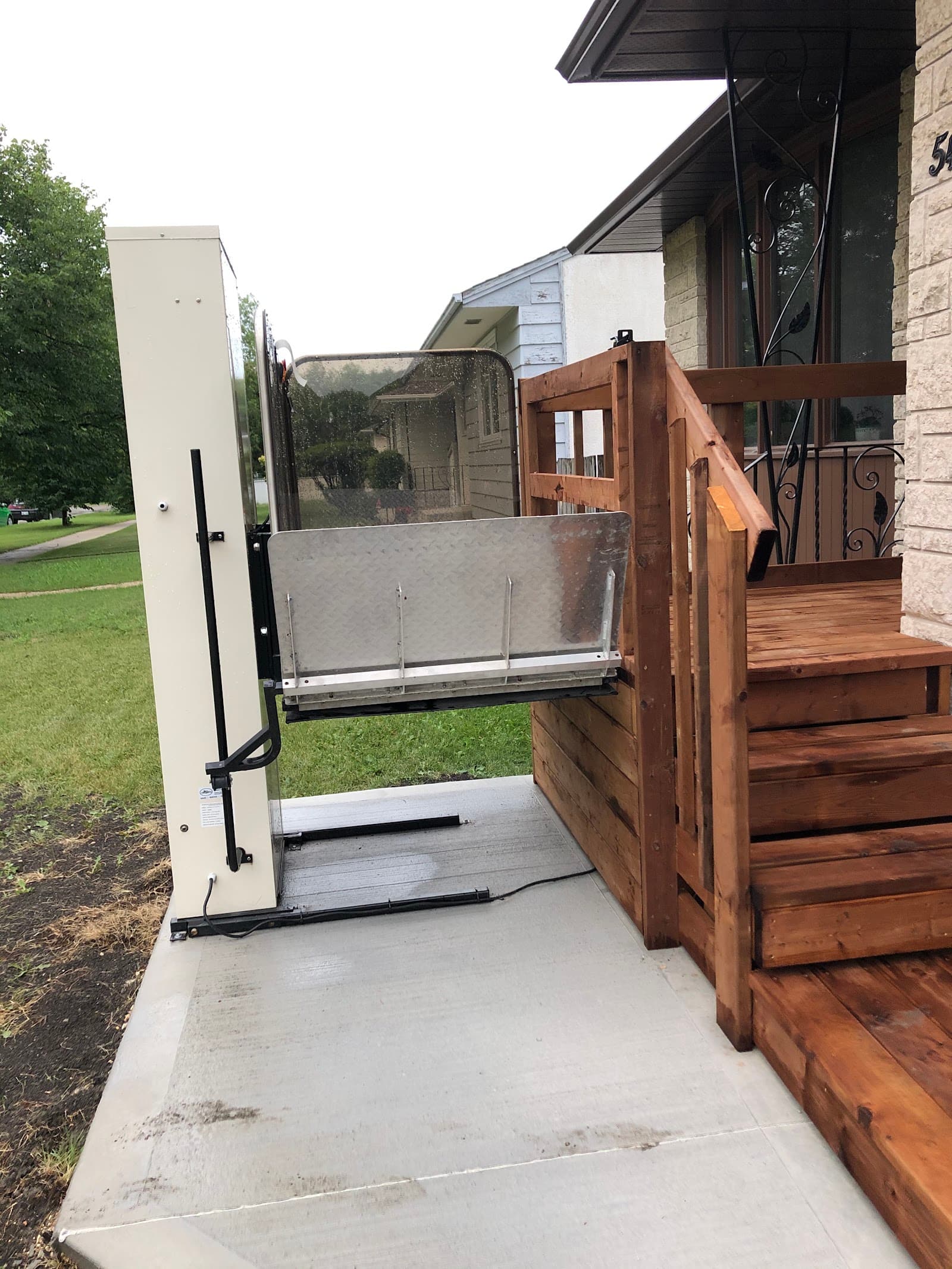
Start with the rise, not the ramp. A safe slope of roughly 1:12 means every bit of height at the door needs about twelve times that length in ramp, so a raised porch on an older River Heights or Wolseley home may call for a switchback with a level landing partway up. Winnipeg's classic bungalows and split-levels often have shorter rises that a straight run can handle. Measure honestly before you fall in love with a design.
Winnipeg weather should drive most of your decisions. Prioritize a non-slip surface that still grips when it's frosty, handrails on both sides, and level landings your parent can pause on with a walker or scooter. Aluminum modular ramps shrug off snow, salt, and freeze-thaw, and they don't rot the way an older wooden ramp will. We'd steer you away from a quick DIY wooden build here. It looks cheaper, but boards heave, warp, and get slick, and a homemade slope that's too steep is genuinely dangerous on ice.
On modular versus permanent, our advisors usually lean modular for Winnipeg families. It goes up fast, meets a safe slope, comes apart cleanly, and you can resell it or take it along if your parent moves to a condo or care home. A permanent poured or built-in ramp can look more finished and suit a home you'll keep for years, but it costs more and locks you in. The honest trade-off: a top-quality modular aluminum ramp is a real investment up front, and some people find it less handsome than custom woodwork.
Whoever you hire, confirm they carry proper licensing and insurance, have real experience with senior and accessibility work, and back the install with a warranty and a clear plan for service if something loosens over a hard winter. Ask how quickly they respond, because a heaved handrail in January can't wait. On the cost of wheelchair ramps in Winnipeg, expect to pay more for longer runs, switchbacks, and premium non-slip finishes, and less for a short straight modular ramp.