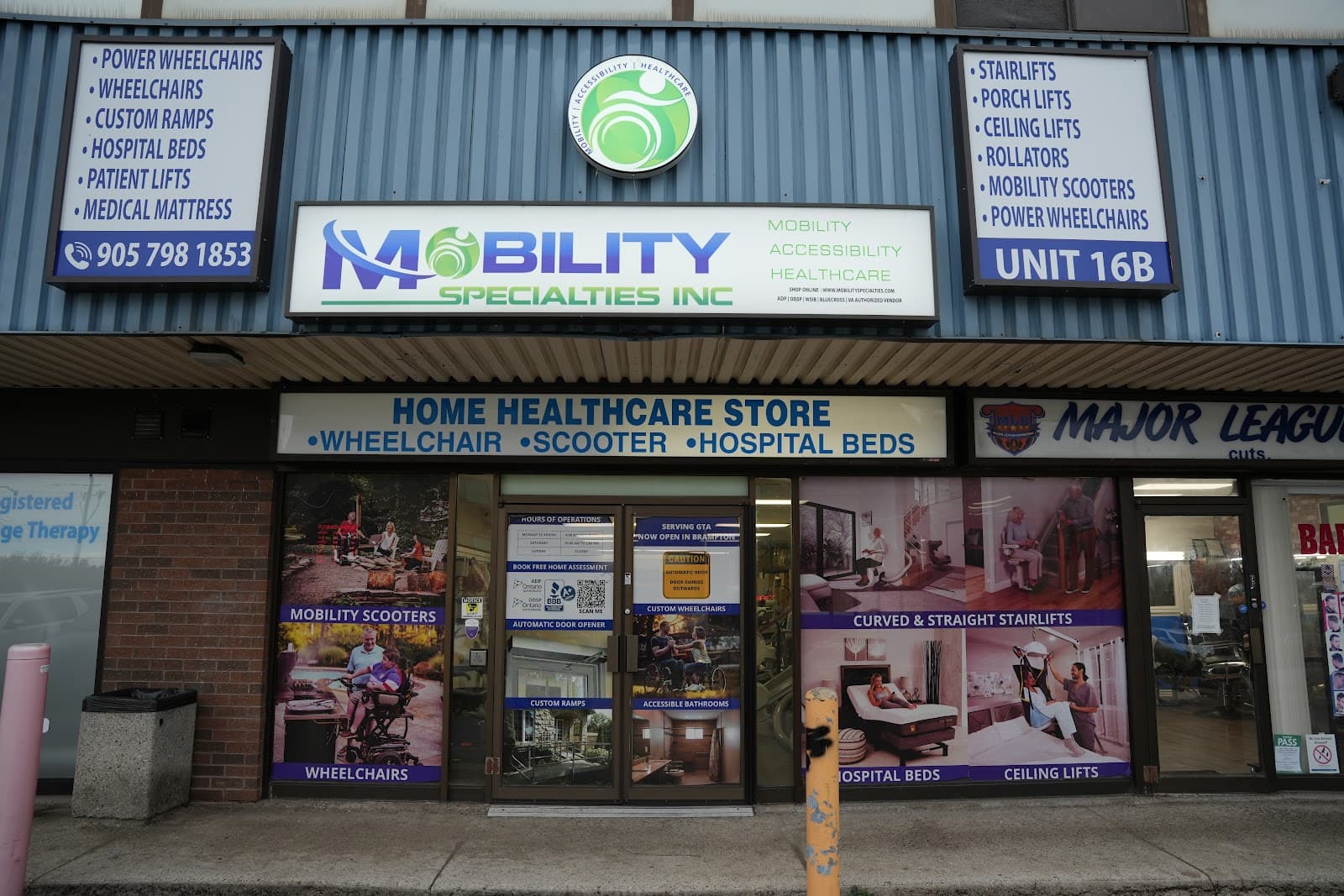
Start by looking honestly at the entrance you want to fix. Many Toronto homes, especially the older semis and Victorians in areas like Riverdale, The Annex, and Leslieville, have a tall front porch with several steps, which means the ramp needs real length to keep a safe, gentle slope of roughly 1:12. Short, steep ramps are the most common mistake we see, and they can be harder and less safe to use than the stairs they replaced. A good installer will measure the rise, work out the run, and often suggest a switchback with a level landing rather than one long straight run that eats up your whole front yard.
Toronto winters matter here. Snow, ice, and freeze-thaw cycles are hard on ramp surfaces, so prioritize non-slip decking, handrails on both sides, and landings that let someone rest and open the door safely. For condo entrances and rentals, a modular aluminum ramp is usually the smarter choice. It's removable and resaleable, needs no permit in most cases, and it goes in fast. For a family that owns the home and expects long-term need, a permanent wood or concrete ramp can look more finished, though it costs more and commits you.
Our advice: for most Toronto families, go modular unless you're certain the need is permanent and you want the ramp built into the house. Modular keeps your options open and lifts easily if plans change. The trade-off is that aluminum ramps look more clinical than a custom wood ramp painted to match the porch, and some people don't love that at the front of the house.
When you compare installers, favour ones with clear seniors and accessibility experience, proper licensing and liability insurance, and a written warranty on both materials and workmanship. Ask how quickly they respond if a handrail loosens or a section shifts after a hard freeze. A company that answers service calls in winter is worth more than one that only quotes the initial job.