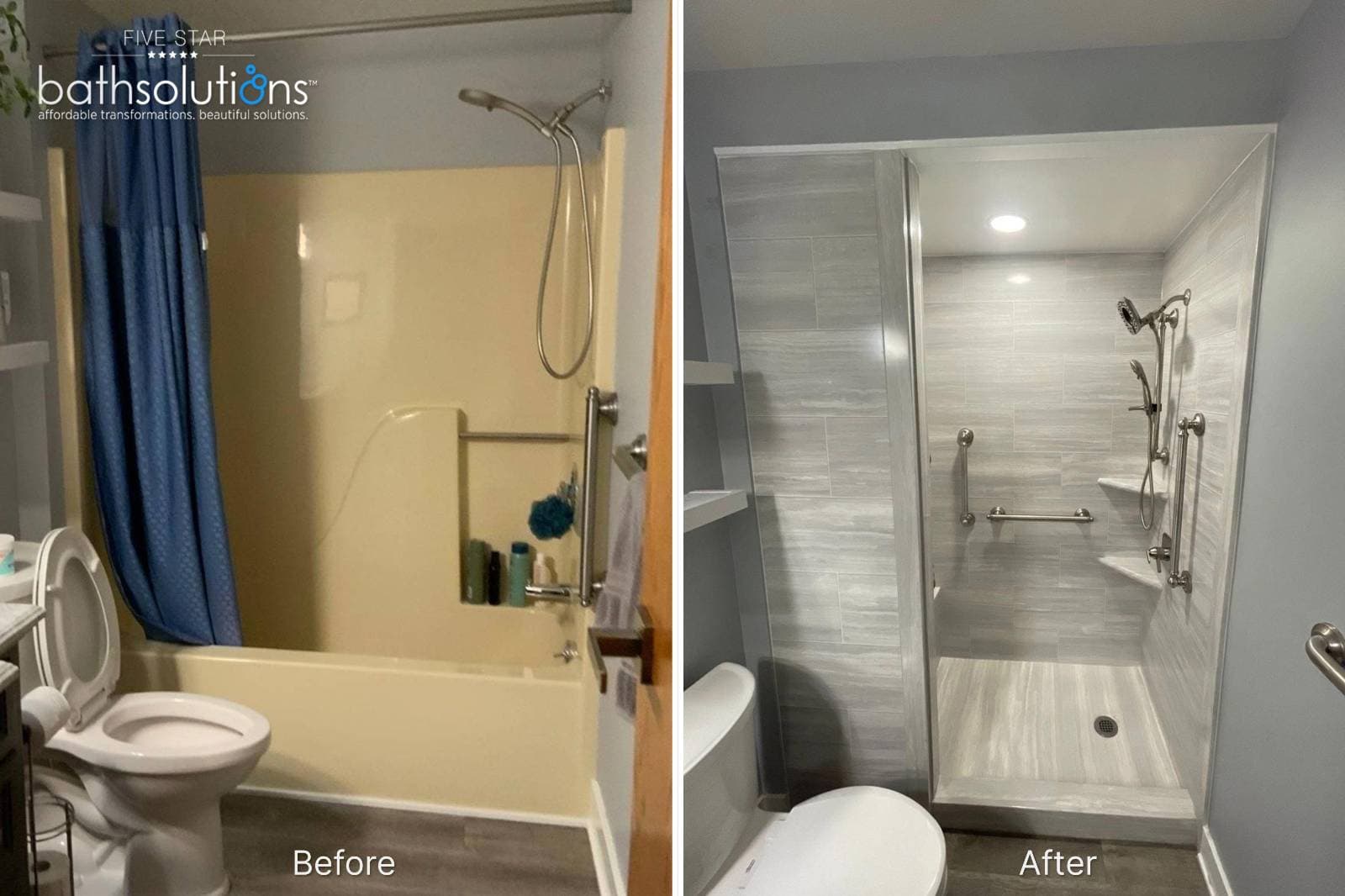
Placement beats quantity. Watch your parent's routine, or ask them to walk you through it: where a hand goes stepping into the tub, turning to sit on the toilet and standing up again. A vertical bar at the tub entry helps with the step in. A horizontal or angled bar beside the toilet helps with sitting and rising. Mark the spots with painter's tape before the installer arrives, so the visit is about fastening rather than guessing.
What the bar is fastened into matters more than the bar itself. In a wood-framed house, bars go into studs or added blocking. In a Mississauga condo, bathroom walls are often steel studs or drywall over concrete, and each needs a different anchor. Ask the installer exactly what they're fastening into and how they'll seal the tile so water can't get behind it. Some condo boards also want notice of any trades working in a suite.
Families often hand this to a general handyman because it looks like a quick job. For grab bars, a fastening mistake stays invisible until the day it fails under a falling person's full weight. Use someone who fits them every week and will tell you which wall material each bar is anchored into. It's one of the few jobs where a specialist is worth it even for a single bar.
Shower grab bars should have a textured or knurled finish so wet hands don't slide. Think beyond the bathroom too: beside the front step, at the top of the basement stairs, or next to the bed. Every few months, give each bar a firm tug, and call the installer back at the first sign of movement.