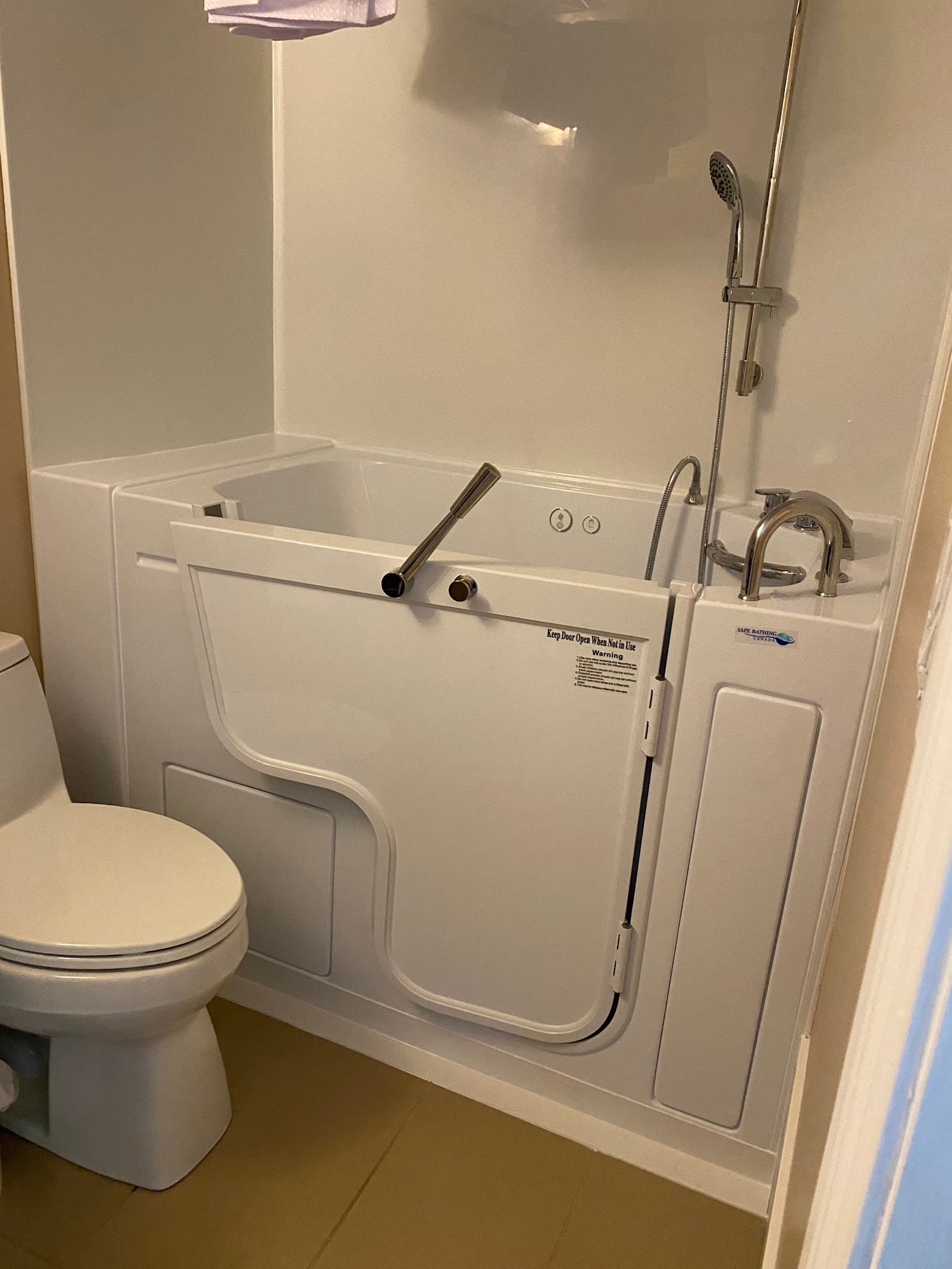
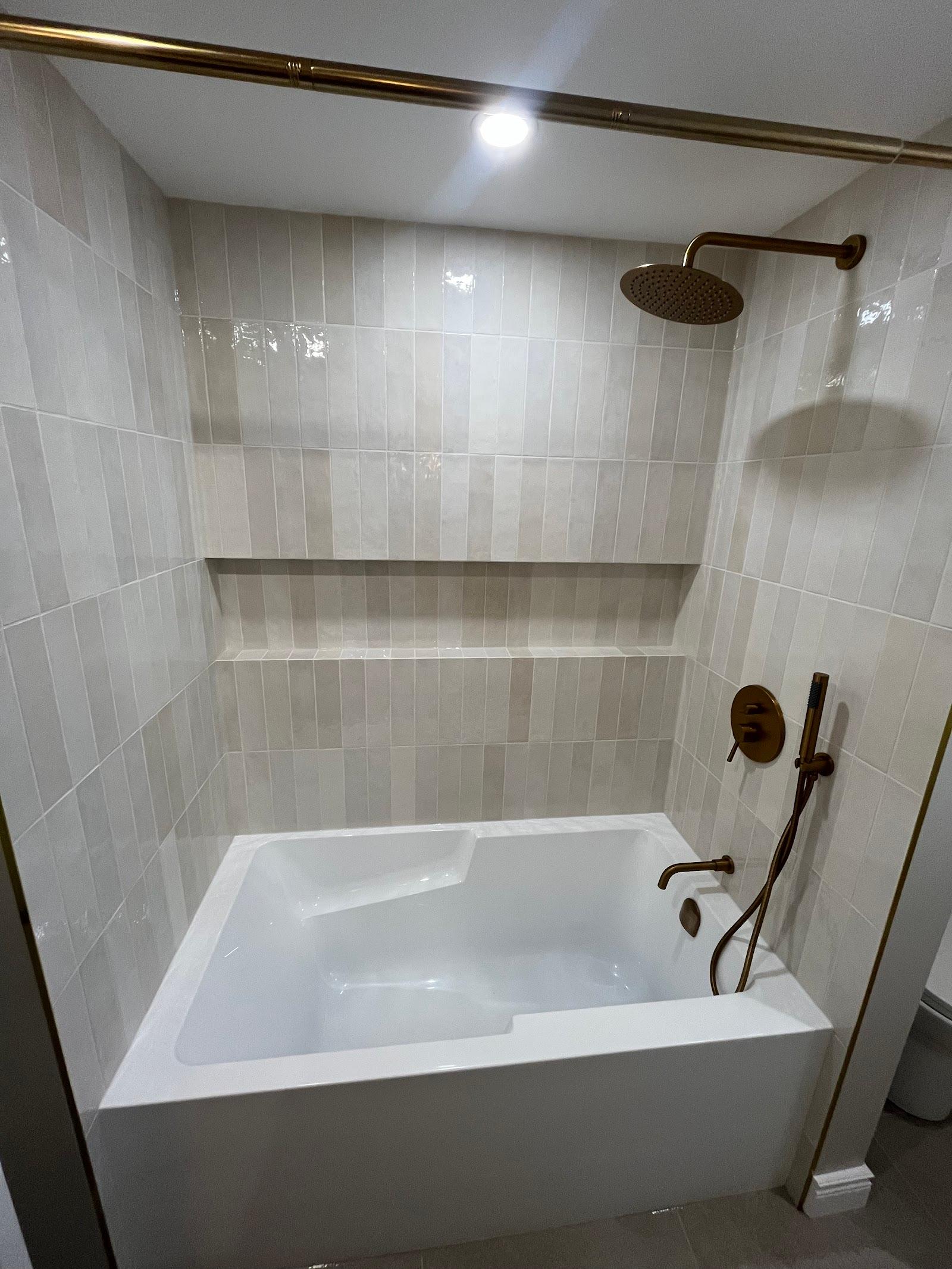
Placement starts with watching. Have your parent show you how they get onto the toilet, into the tub and up again. Note which hand reaches first and where they lean. A good installer will want to see this too, then mark the wall at your parent's hand height before drilling. Shower grab bars usually go on the long wall of the tub, angled or level, with a short vertical bar at the entry for stepping in.
Hamilton's housing stock makes the fixing the real job. Many lower-city homes have plaster over lath, which crumbles if drilled carelessly, and studs that don't sit where modern ones would. Newer homes in Ancaster or Waterdown often have tile over drywall with no backing at all. Ask the installer how they'll anchor into studs or blocking, and which hollow-wall anchors they trust if a stud isn't there. A bar that's screwed into tile alone is the mistake that turns into a fall.
Everyone assumes the toilet needs a wall bar beside it. For many seniors a fold-down arm or a floor-mounted frame works better, because the nearest wall is too far away or holds a vanity. Suction-cup bars are sold everywhere and feel solid in the store. They aren't safe for a parent's full weight and can release without warning. Ask for bars with a textured or knurled grip and a weight rating that suits your parent with room to spare. Choose a colour that contrasts with the wall if eyesight is fading. Grab bars in bathrooms are installed home work, so the Home Accessibility Tax Credit may apply. Every few months, pull on each bar firmly and call the installer if anything shifts or the caulk cracks.