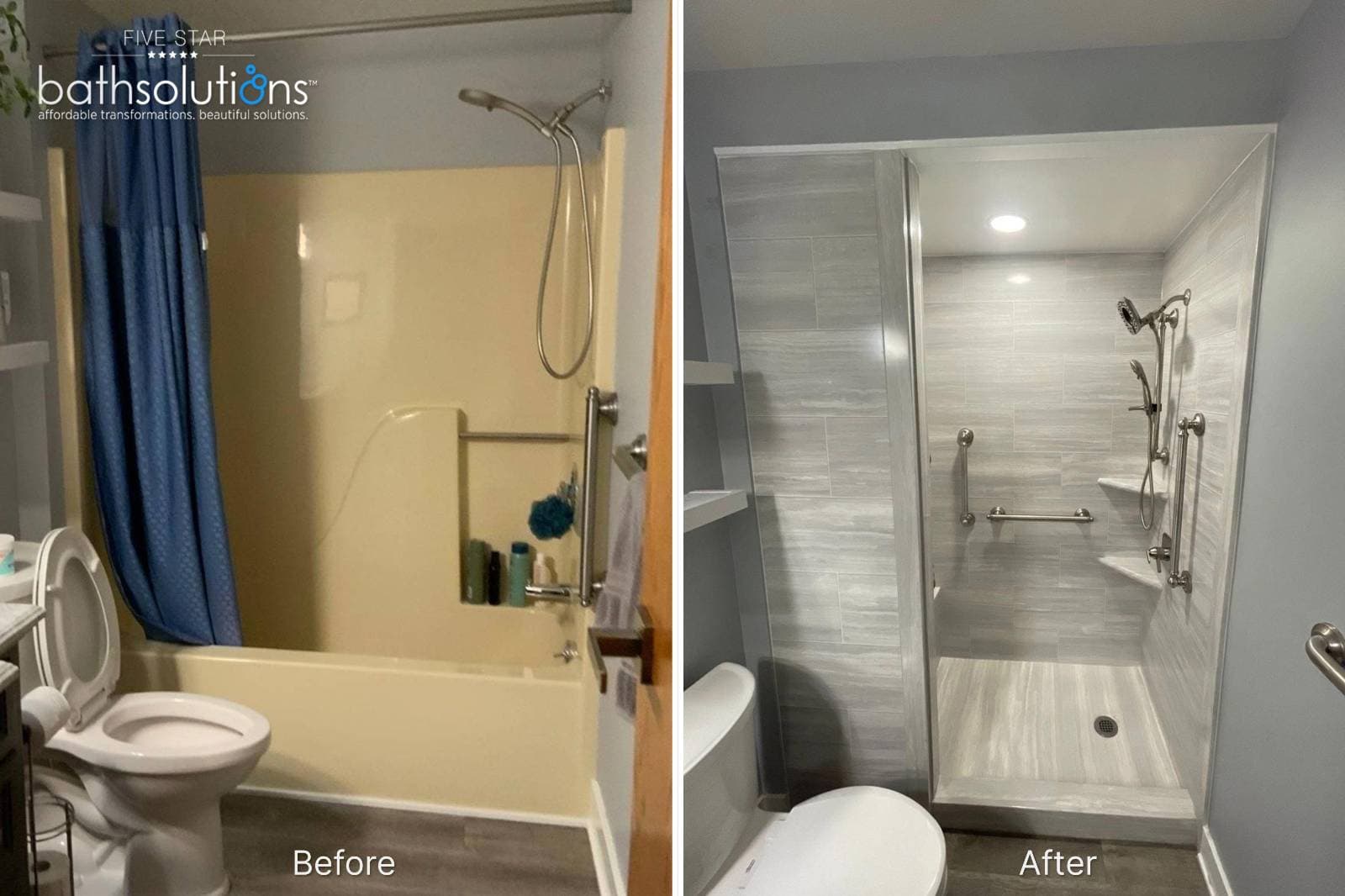
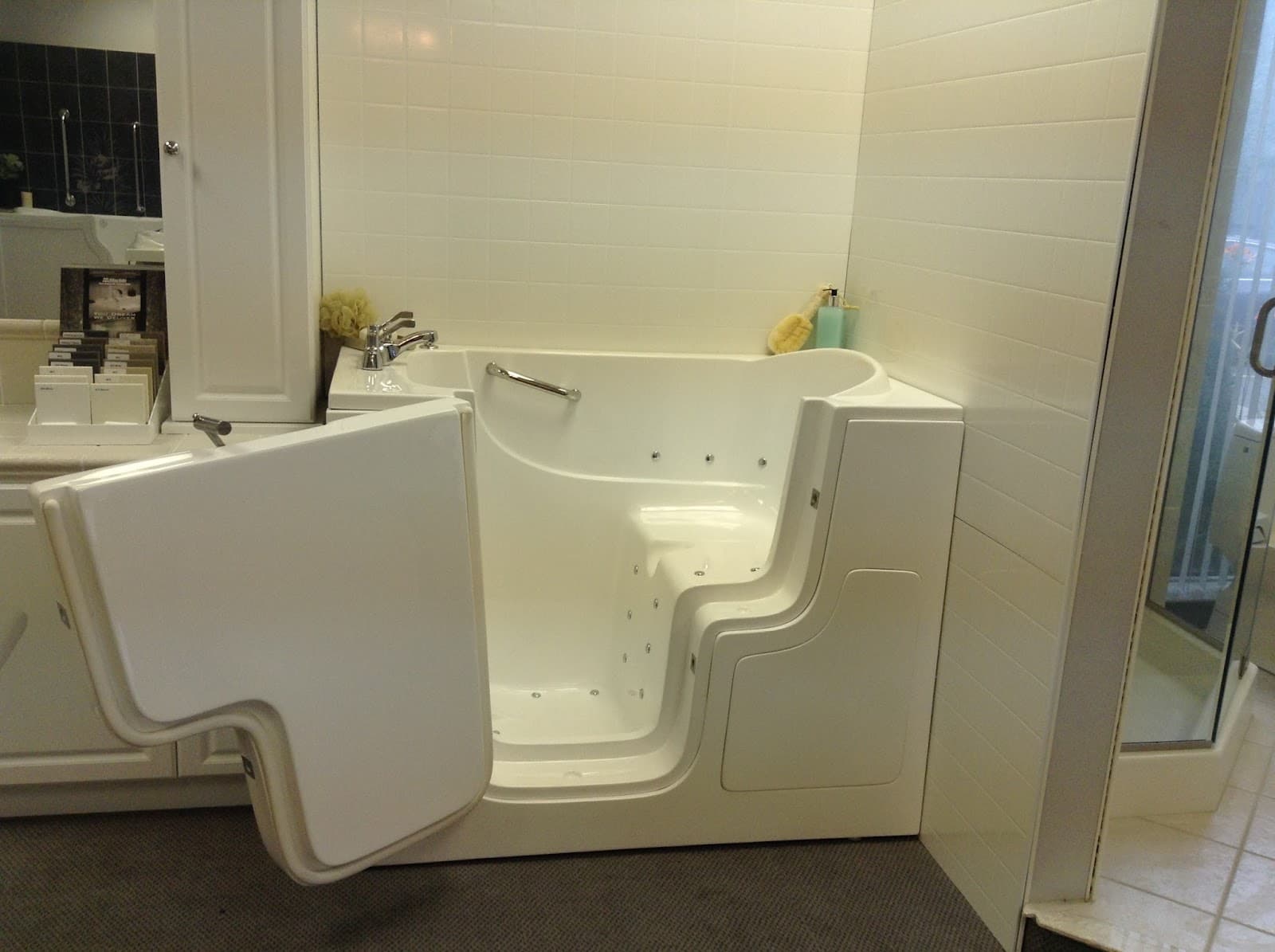
A roll-in shower has no curb at all, so the floor must slope to the drain and is sometimes recessed below the bathroom floor. On a concrete condo slab, that may not be possible without major work. A low curb is quicker, cheaper and often good enough for someone who walks with a cane. Ask the installer to look at the floor structure under the bathroom before promising a true zero threshold, and to explain what they'd do if it isn't feasible.
Condo towers in the City Centre and along the Port Credit waterfront usually need board approval for anything that touches waterproofing or drains, and work may be limited to weekday hours. Have that conversation first, because it sets the schedule. In older detached homes, the tub often sits against an outside wall, so ask where the shower valve will go and how the wall will be insulated. A cold exterior wall behind a new shower is unpleasant for a senior through a long Mississauga winter.
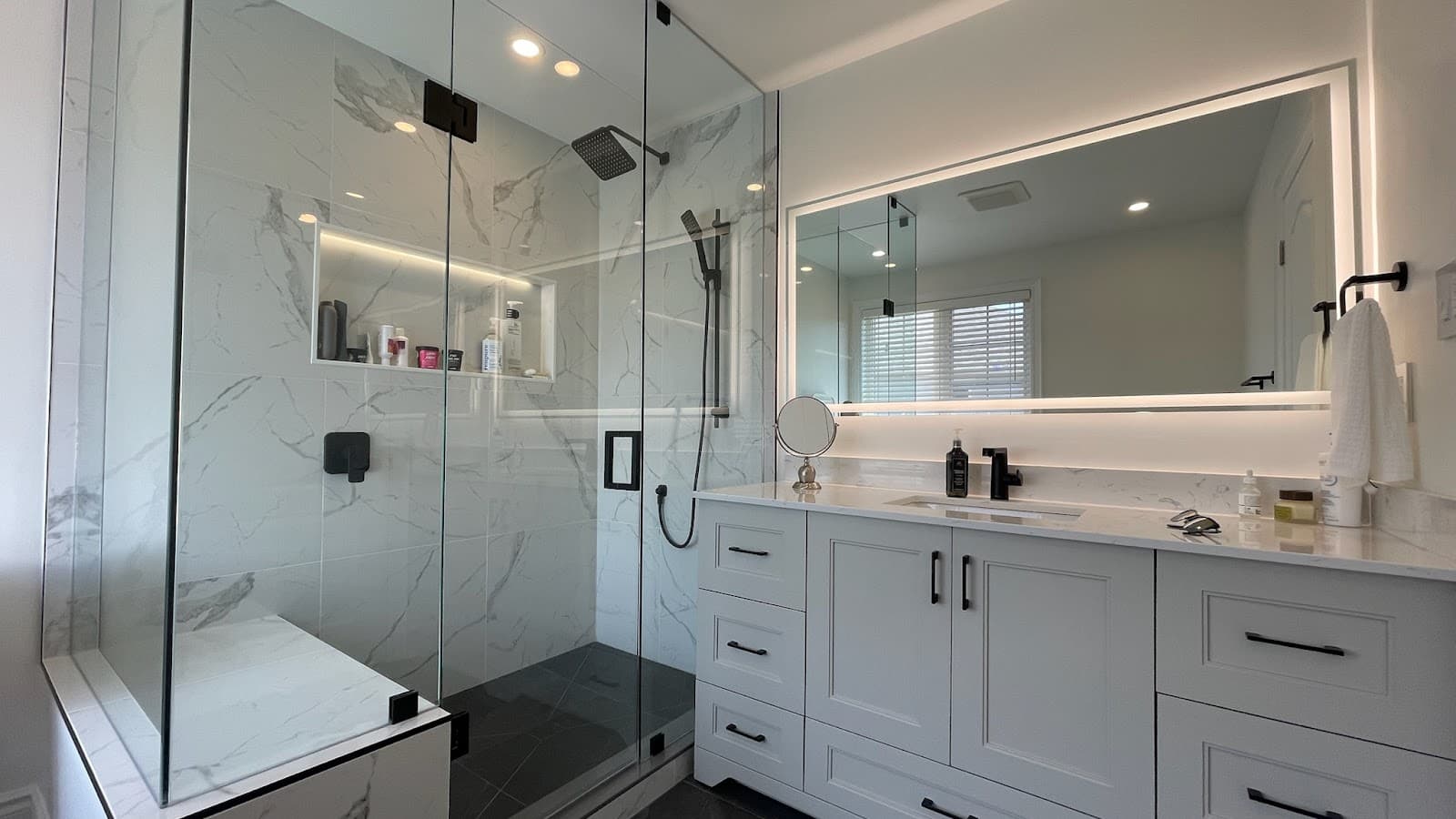
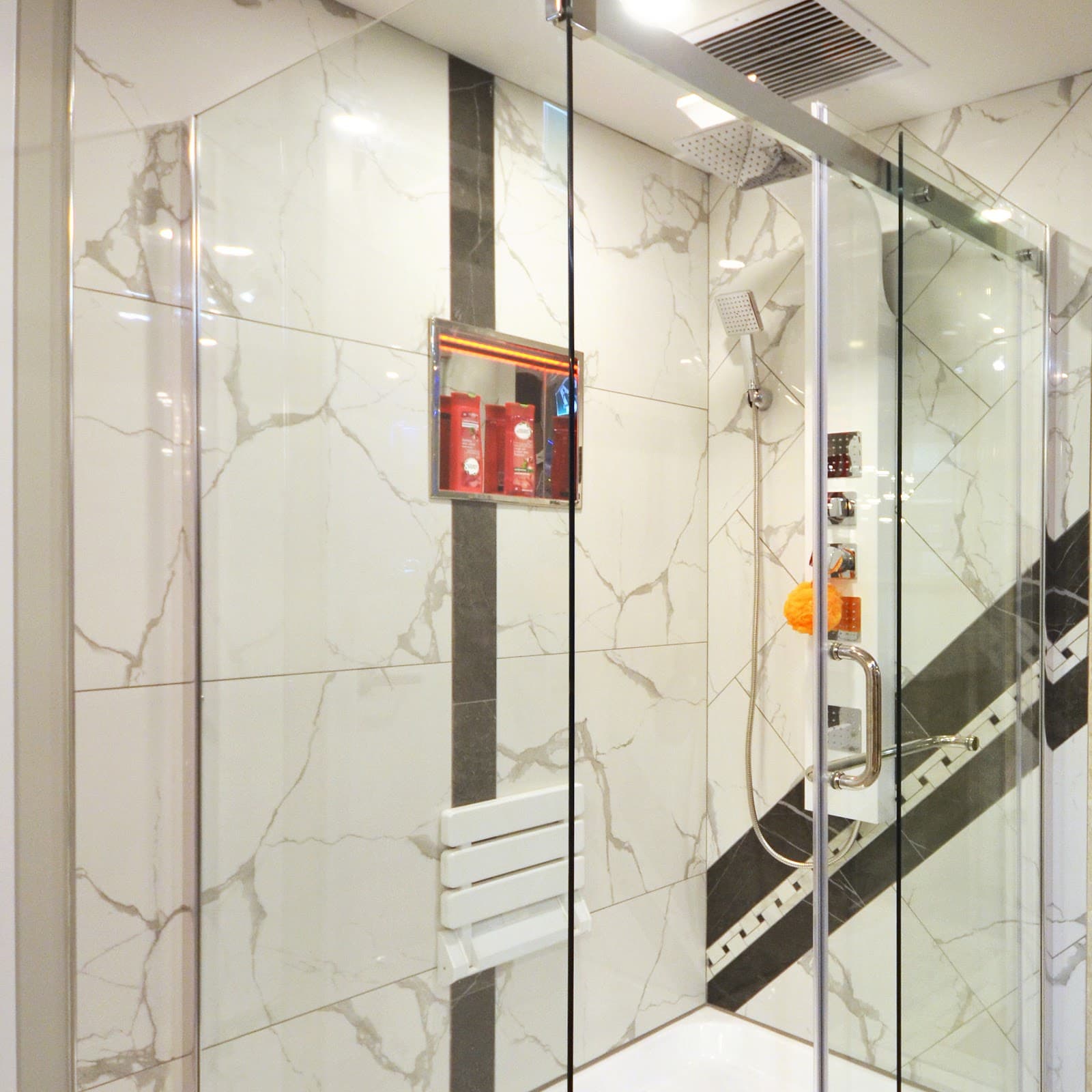
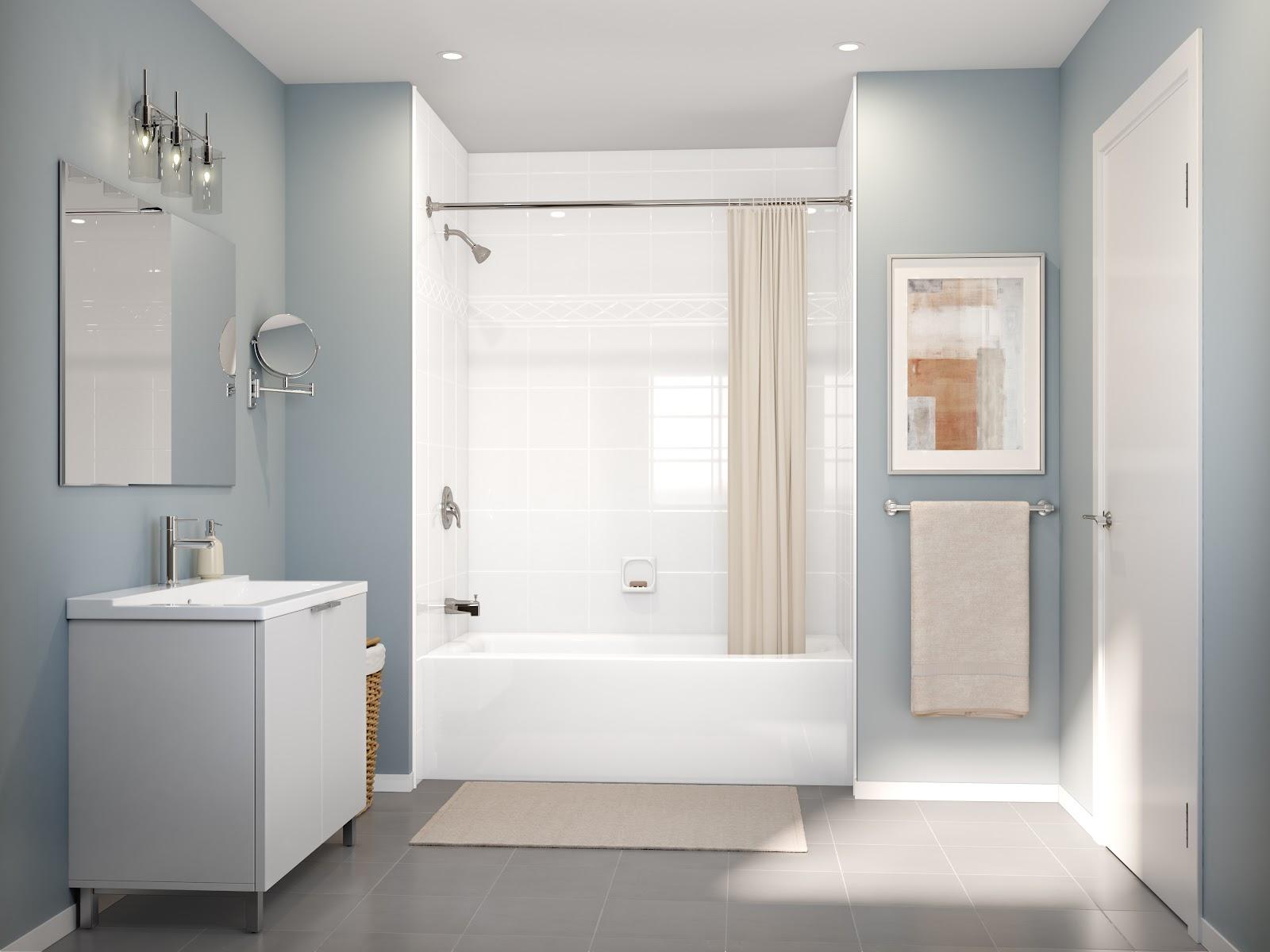
The common mistake in a tub to walk-in shower conversion is copying the magazine photo: a fixed rain head and a full glass door. For an older bather, a hand-held shower on a slide bar, a curtain or half-height door so a caregiver can reach in, and a pressure-balanced anti-scald valve are worth far more. Put the controls near the entry so the water can be warmed up from outside the spray.
Ask what membrane goes under the tile and how long it's warrantied, since a leak in a curbless shower usually shows up first in the ceiling below. Grout and caulking need a look once a year. Because it's installed work, an accessible shower may count toward the federal Home Accessibility Tax Credit, so file the invoice somewhere safe.