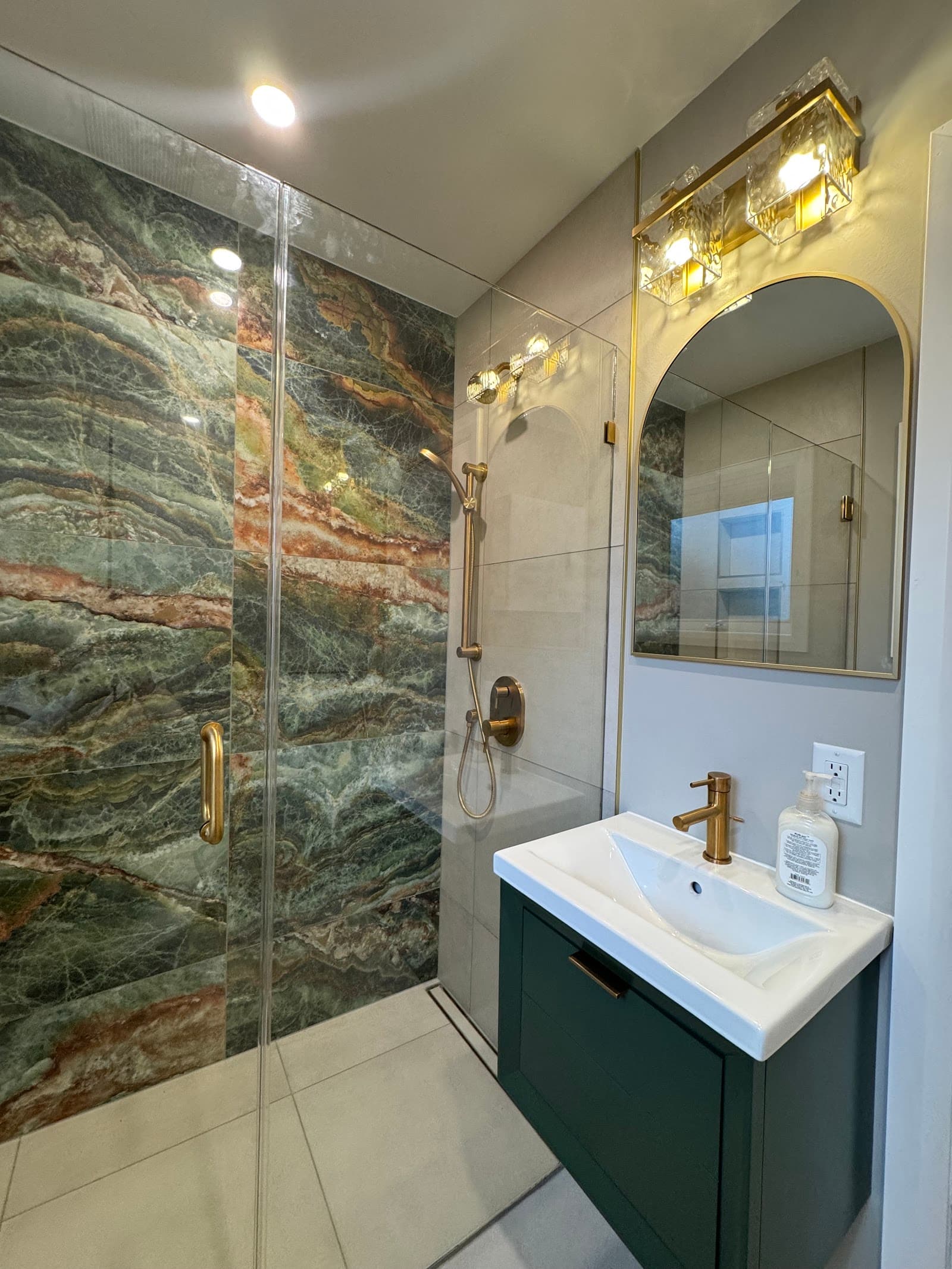
Start by matching the shower to the home and to how your parent moves today, plus a few years out. A roll-in (zero-threshold) shower is the safest choice if a wheelchair or walker is in the picture, and it's the layout we lean toward when there's room, because nobody has to step or lift over a curb. The honest trade-off: a true roll-in usually means adjusting the floor and drainage, which is more involved in older Ottawa homes with joist-and-subfloor bathrooms in the Glebe, Westboro, or Sandy Hill. A low-curb shower is gentler on the budget and the reno timeline, and it's a sensible middle ground for someone who's steady on their feet but tired of the tub wall.
Whichever you pick, prioritize built-in seating, properly anchored grab bars, a hand-held sprayer, and anti-scald controls. Those controls matter more than people expect here, since older plumbing can send a jolt of hot water when a tap runs elsewhere in the house. In condos downtown or in Kanata and Barrhaven, check your building's rules and water shut-off procedures before booking, and ask the installer if they've worked in your building type.
For the installer, look for hands-on experience with seniors and accessibility work, not just general bathroom renos. Confirm they're licensed and insured in Ontario, ask what the warranty covers on both the base and the labour, and find out how fast they respond if a valve or door seal fails mid-winter. Ask to see photos of a roll-in they've built in a home like yours.
Our recommendation: if your parent's mobility is declining, spend a bit more now on a roll-in and do it once. The trade-off is a longer, costlier project up front, but retrofitting a low-curb shower into a roll-in later almost always costs more than building it right the first time.