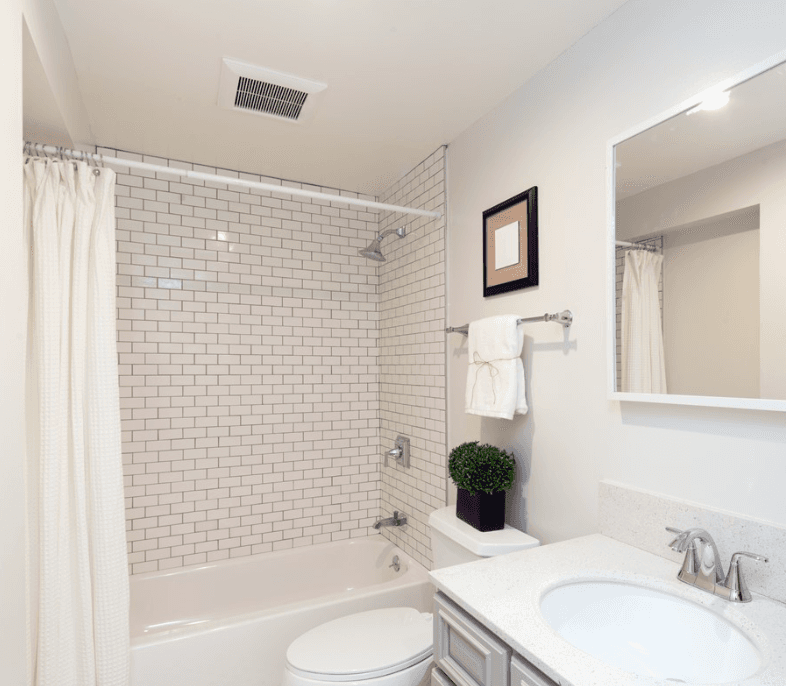
Start with what your parent's bathroom actually allows. Hamilton's older homes, like the brick two-storeys in Westdale or the semis near Gage Park, often have narrow bathrooms with joists running the wrong way, which affects how a drain and a roll-in floor can be built. Split-levels and Mountain bungalows tend to have more room but sometimes a slab or crawlspace underneath that changes the plumbing plan. A good installer will look under the floor before promising anything, not just measure the walls.
On the roll-in versus low-curb question, we lean toward a true zero-threshold roll-in if a wheelchair or walker is in the picture now or likely soon. It removes the step completely and won't need redoing in a couple of years. A low-curb shower costs less and is easier to fit into a tight existing footprint, so if your parent is steady on their feet and just wants to stop stepping over a high tub wall, it's a sensible pick. The honest trade-off: roll-ins usually mean more floor and drain work, so the disruption and price are higher up front.
Whatever you choose, insist on built-in seating and grab bars anchored into blocking, a hand-held shower head, and anti-scald controls. These matter year-round but especially in winter, when a cold Hamilton morning makes a warm, safe shower non-negotiable. Prioritize installers with real senior and accessibility experience, proper Ontario licensing and insurance, a clear written warranty, and a sense of how fast they respond if something needs a fix. Our advice: hire a specialist over a general renovator who does the odd bathroom. You'll pay a little more, but you get grab bars that hold and a floor that drains properly, and that's worth it.