Start with the shape of the room. Many older Vancouver homes, from Grandview-Woodland bungalows to Point Grey character houses, have small second-floor bathrooms with joists and plumbing that make a true zero-threshold roll-in a bigger job. Concrete-slab condos in places like Coal Harbour or Metrotown come with their own limits, since strata rules and shared plumbing stacks can shape what's allowed. Before you fall in love with a design, ask an installer to look at the floor structure and drainage. That single visit tells you whether a roll-in is realistic or whether a low-curb shower is the smarter, cleaner build.
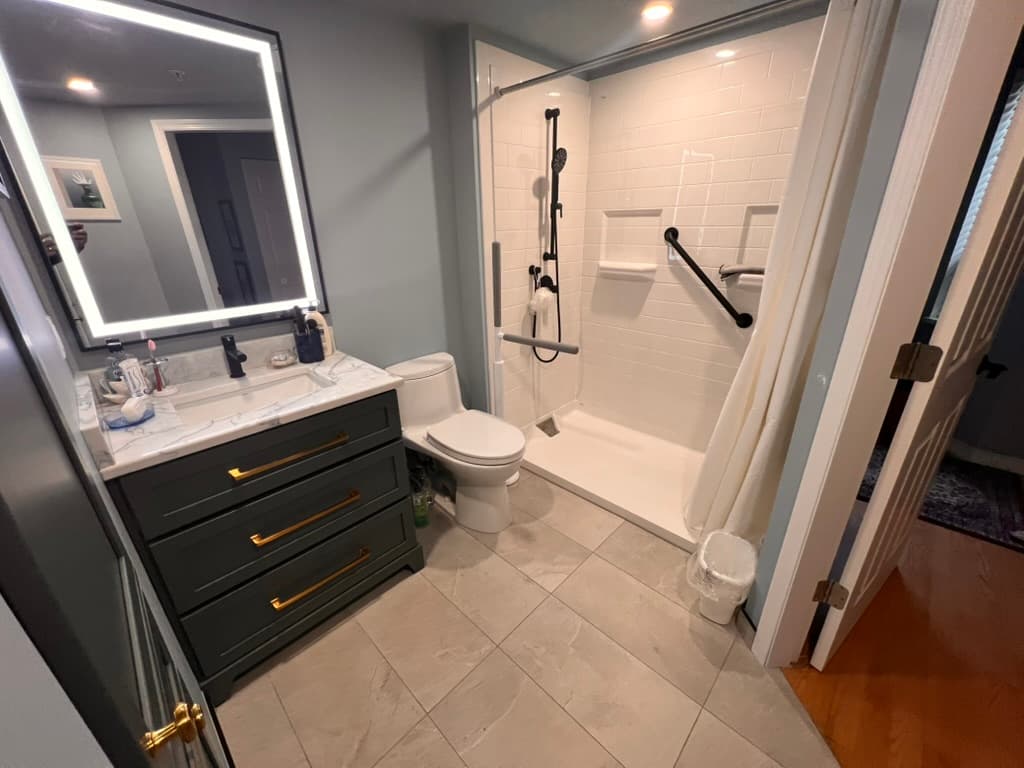
On finishes, don't skimp on the parts that keep your parent upright. Built-in seating that carries real weight, grab bars anchored into blocking (not just tile), a hand-held wand, and anti-scald controls do the quiet daily work. Vancouver's wet climate makes waterproofing non-negotiable, so favour installers who take the membrane and slope seriously rather than rushing to tile. Ask about senior and accessibility experience specifically. Someone who builds beautiful spa showers isn't always the person who understands turning radius, transfer height, and reach.
Our honest take: for most Vancouver homes, hire a licensed, insured contractor who does accessibility work regularly, and lean toward a low-curb shower unless a wheelchair user truly needs a full roll-in. Low-curb is easier to waterproof, gentler on your budget, and still removes the dangerous step-over. The trade-off is that a low curb isn't fully roll-in, so if a wheelchair is part of daily life now or soon, pay for the zero-threshold done right the first time. Whatever you choose, get the warranty in writing, confirm workmanship and product coverage, and ask how fast they respond if a seal or valve fails after that first rainy winter.