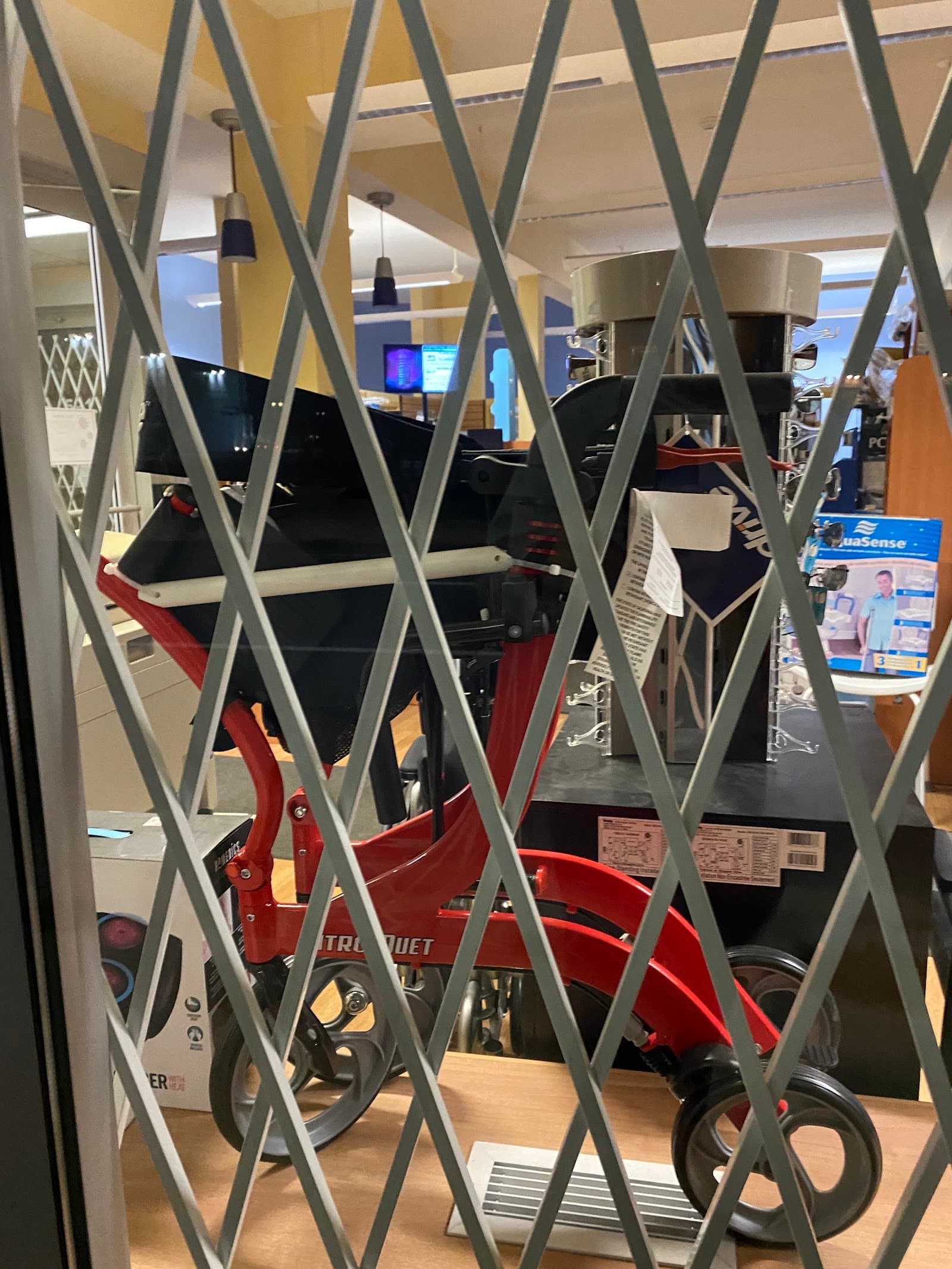
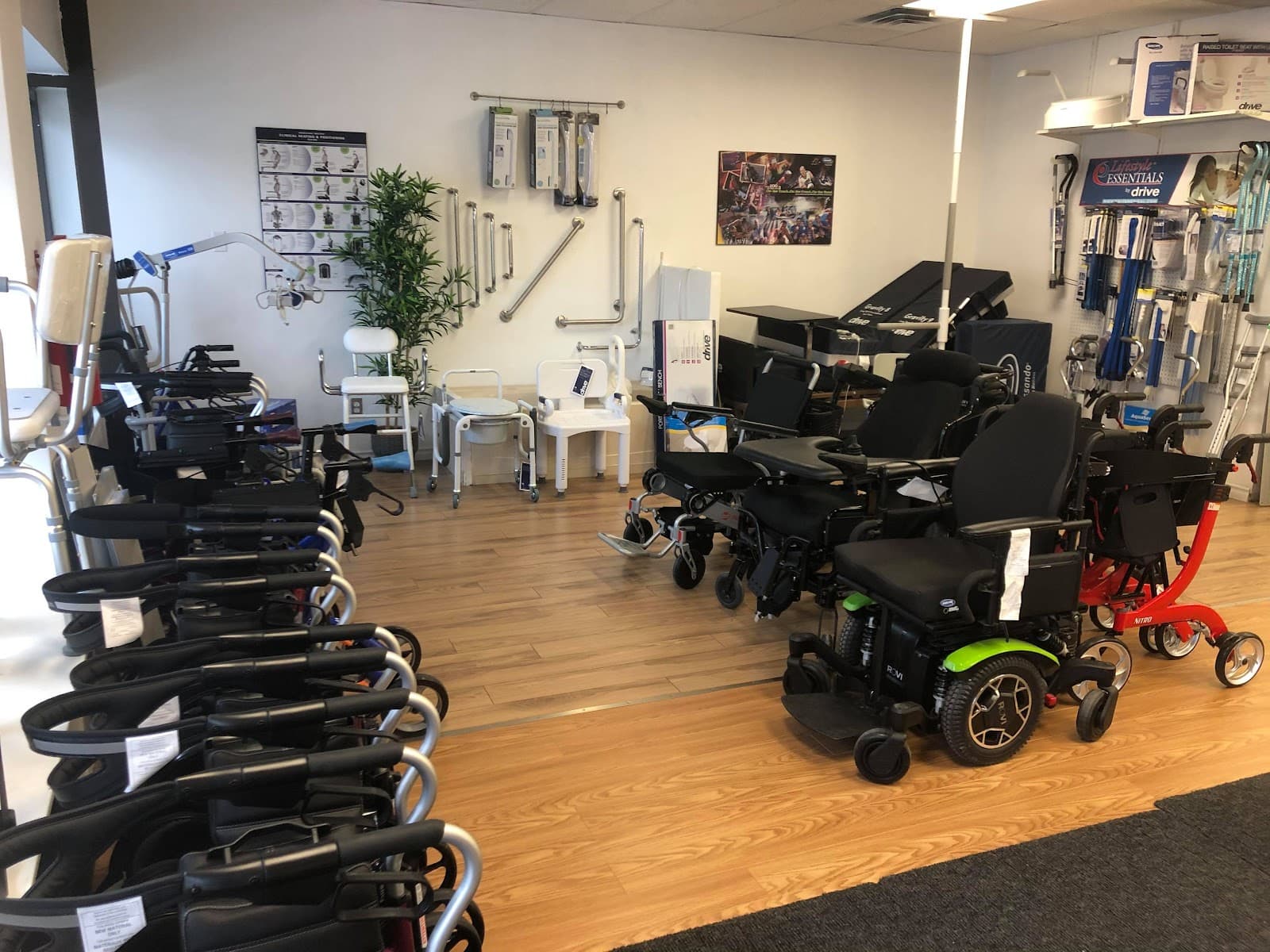
Start by deciding between a standard walker and a wheeled rollator. A standard frame gives the most support for someone who leans heavily or shuffles, and it stays put when they stop. A rollator suits someone who walks steadily but tires, because it rolls along and has a seat for rests. Many seniors need both: the frame indoors after a hospital stay at Juravinski or St. Joseph's, then the rollator for errands once strength returns.
Hamilton's streets shape the choice. The long walks across Mountain plazas and the slope of many lower-city side streets put real work on the brakes. Small wheels catch in sidewalk cracks and slush. For outdoor use, choose larger wheels and loop brakes your parent can squeeze and lock with a weak grip. For a narrow brick house, check that it folds small enough to sit beside the front door without blocking it.
Fitting is quick but rarely done. Have your parent stand in their usual shoes with arms hanging loose, and set the handles level with the wrist crease. Then watch them walk a few lengths, sit on the seat and stand again. The most common mistake is setting handles too low, which pulls a person into a stoop and makes falls more likely, not less. One opinion worth stating plainly: the cheapest rollator for seniors is rarely the bargain. Light frames with thin brake cables slip out of adjustment, and a brake that doesn't lock is a hazard when your parent sits down. Check the brakes and tire wear every month or so, and have the store tune it each spring after a winter of salt.