Old South and Wortley Village are full of older houses whose staircases turn near the bottom with one or two wedge-shaped winder steps. Those few treads are what move a job from a straight rail to a curved one, and a curved rail is bent to measurements from your stairs alone, so a used unit almost never fits. In the newer north and southwest subdivisions straight runs are more common, but a landing halfway up can still mean two straight lifts or one curved rail. Ask the installer which they would choose for this house and why.
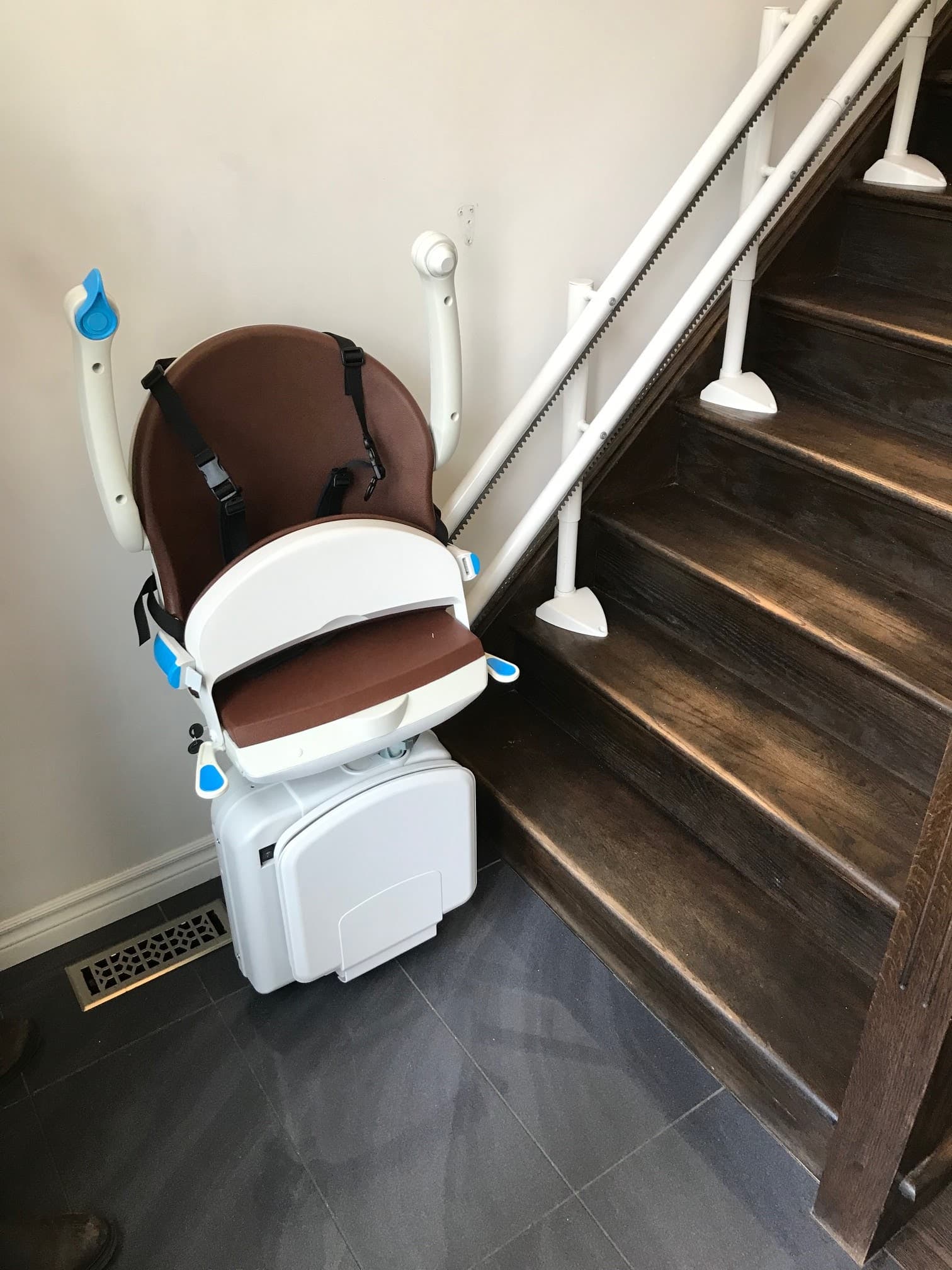
Before anyone visits, measure the stairs at their narrowest point, count the steps and note what sits at the top and bottom: a door, a hallway corner, a heat register. The top landing decides more than people expect. A swivel seat lets your mother turn to face solid floor before she stands, instead of twisting off a seat that stops facing the drop. Where the rail would cross a doorway or the front hall at the bottom, a folding or hinged rail end keeps the walkway clear for everyone else.
The mistake families make most often is choosing on price and upholstery before checking the weight rating and seat width against the person who will actually ride it. A stair lift for seniors who are tall or heavier may need a heavy-duty model, and the standard one becomes an expensive return. Have your parent sit on a demo seat if the installer carries one.
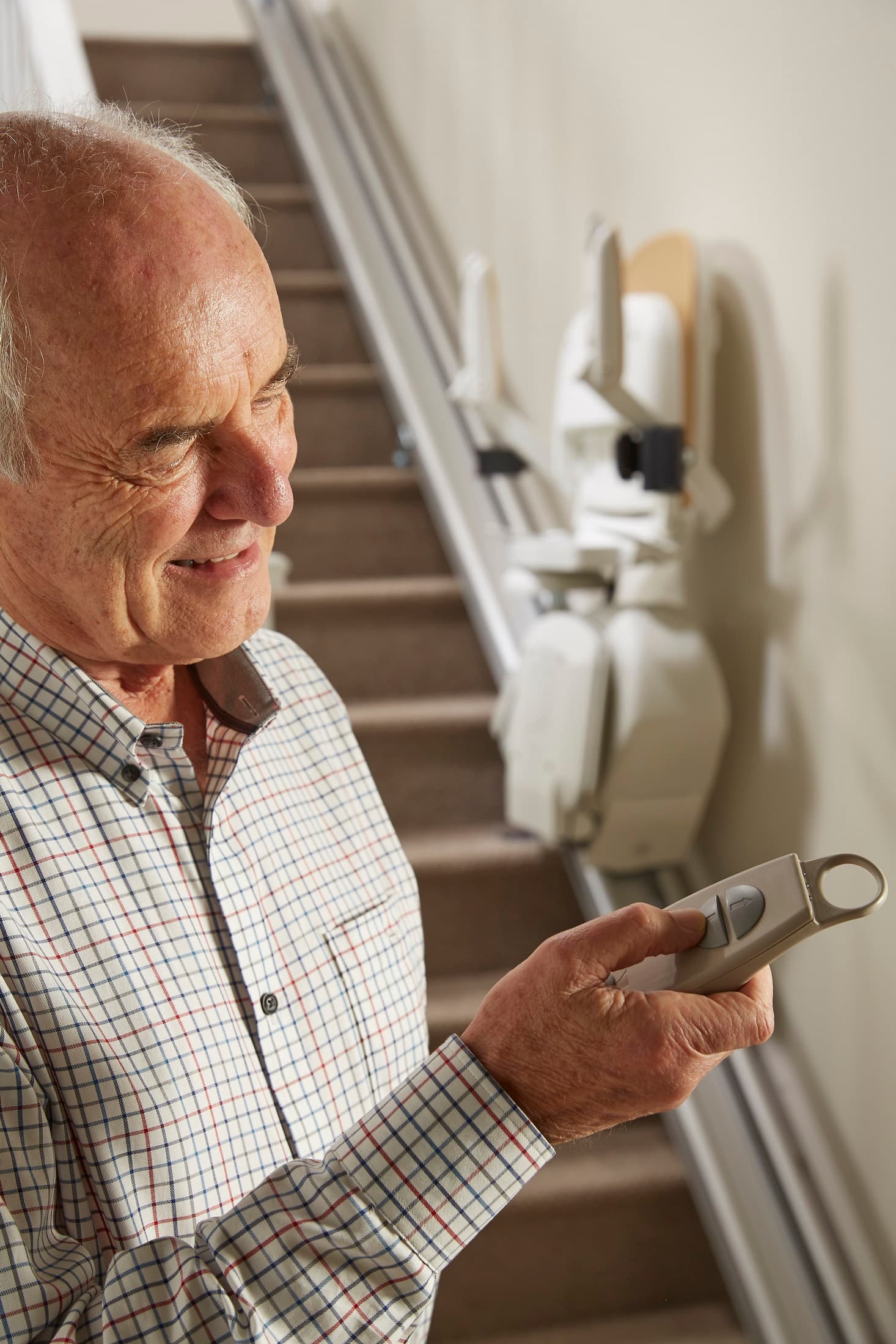
Every stair chair lift runs on batteries that charge when it's parked at either end of the rail, which is why it keeps working through a winter power cut. Those batteries wear out with age, so ask how long they usually last in that model, whether the technician carries spares and who answers the phone on a weekend. The most common early service call for a chair lift for stairs is a flat battery from being left parked mid-flight, so show your parent where to stop it. Because it is installed home work, the lift may count toward the federal Home Accessibility Tax Credit, so keep the invoice.