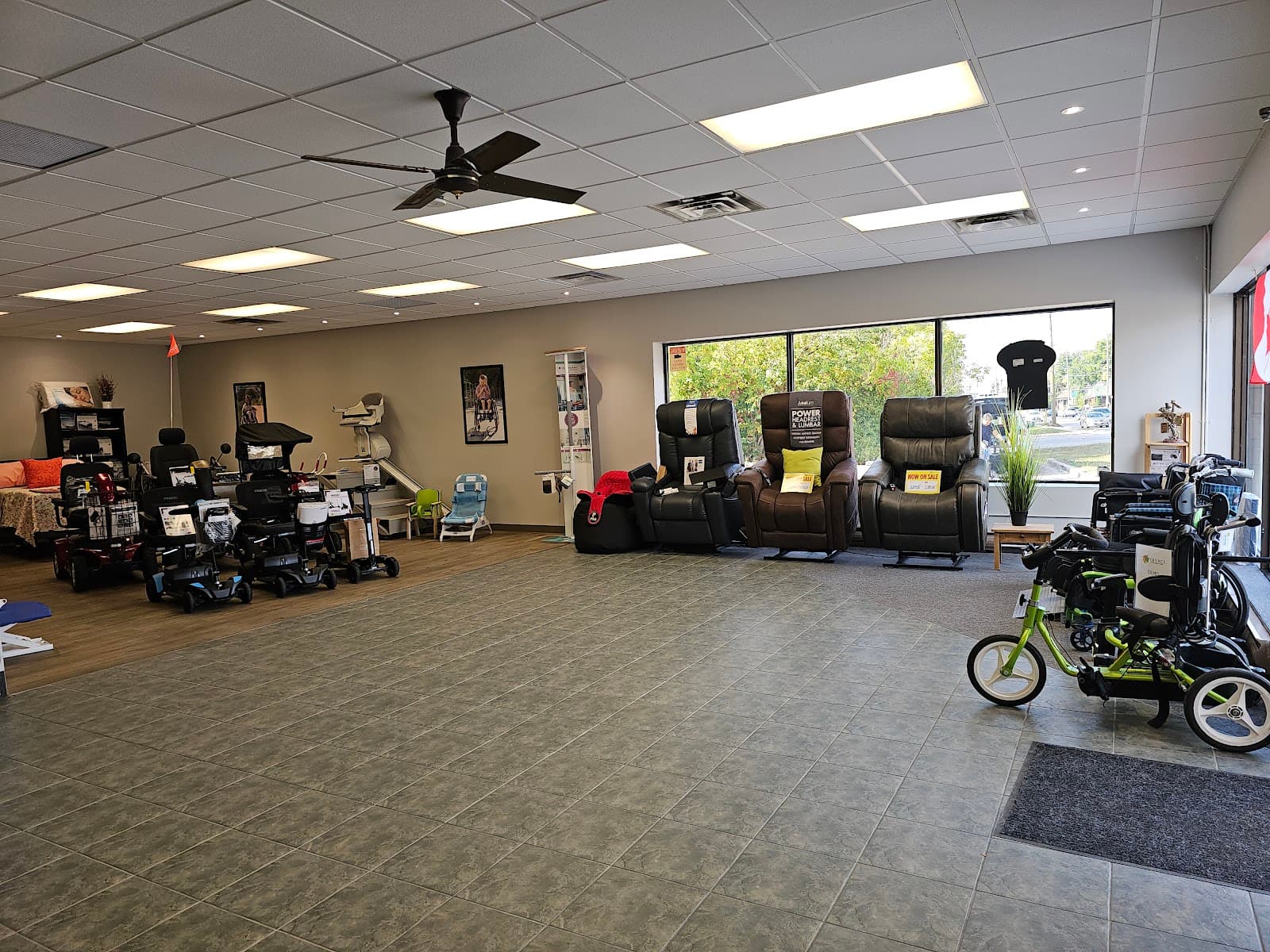
Fit is about the body, so measure your parent, not just the room. Seated in an ordinary chair, measure from the floor to the back of the knee, then from the back of the hips to the knee. A lift chair for seniors should let their feet rest flat on the floor with the seat fully lowered, and the seat shouldn't be so deep that they slide back and slump. Shorter parents often need a petite model. Bring both numbers to the store and ask staff to match them.
The biggest, plushest chair on the floor is often the worst choice for a frail senior. Deep cushions swallow them, and getting out still takes effort even with the lift. A firmer seat at the right depth helps far more. Likewise, an infinite-position lift chair recliner is lovely for someone who naps or sleeps in it, but a simple two-position model with fewer buttons can be safer for a parent with memory changes.
Then look at the room. Many living rooms in Wortley Village and Old South are compact, so a wall-hugger design that slides forward as it reclines can sit closer to the wall. Measure the front door, any tight turn in the hall and the space in front of the chair when fully lifted. Ask whether the store delivers into the room and removes packaging, since these chairs are heavy.
Ask about the power side before you buy. A power lift chair should have a backup battery so it can lower your parent if the power fails in a winter storm. Check the warranty separately for the lift mechanism, the motors and the upholstery, because they are often different. Find out whether repairs happen in your home or the chair has to go back to the shop.