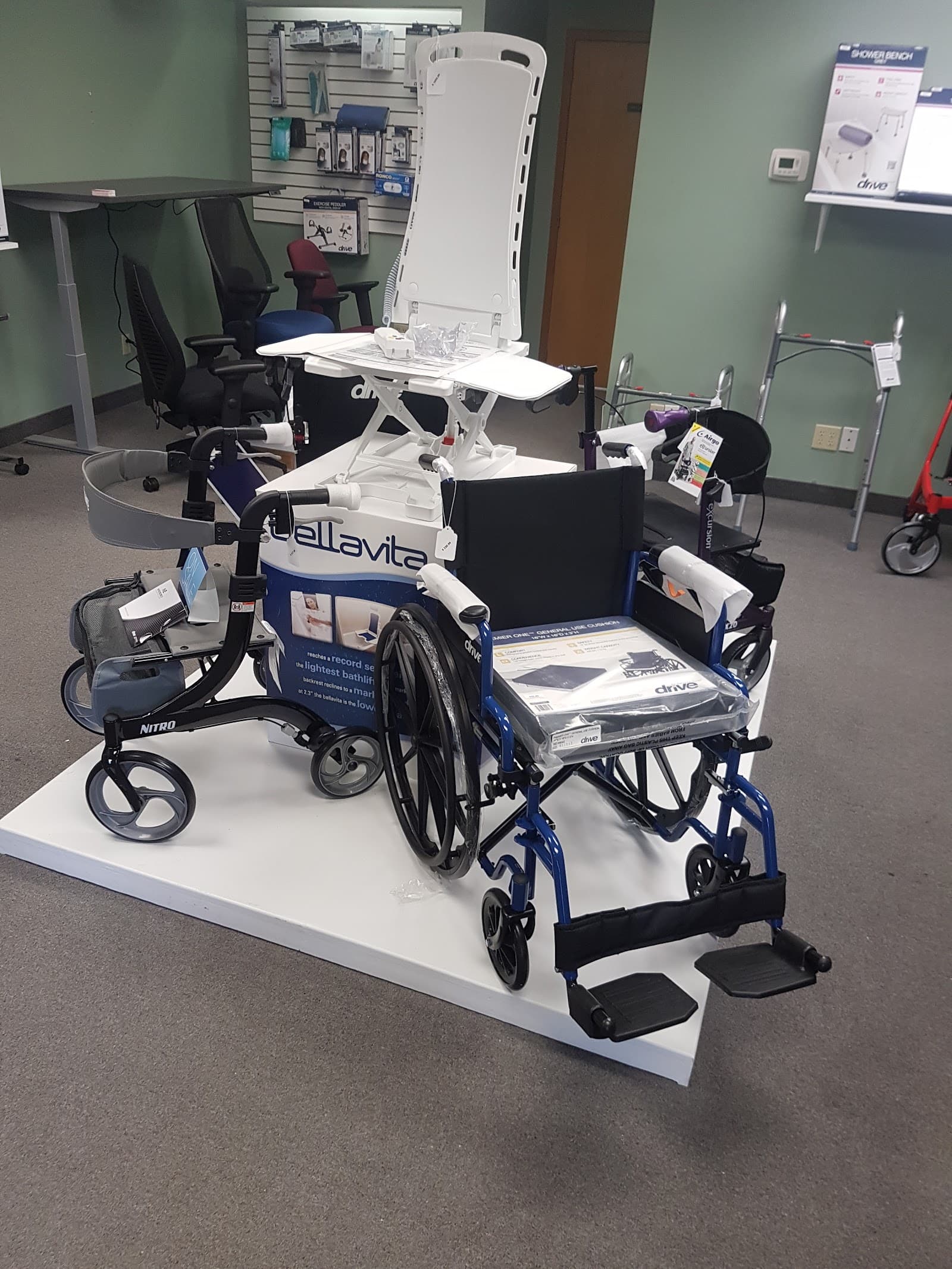
London sits in a part of southwestern Ontario where winters bring real accumulations of snow and ice, and where the housing stock ranges from century-old brick homes in Old South and Woodfield to newer bungalows out near Masonville and White Oaks. That mix matters a lot when you're choosing a wheelchair. Older homes often have narrow doorways, tight hallways, and no-step entries that were never designed with a wheelchair in mind. Before you buy, have someone measure the narrowest doorway and the turning space in the kitchen or bathroom. A compact, tight-turning-radius manual chair may serve a person living in a heritage row house far better than a full-size power chair, even if the power option feels more appealing on paper.
Our advisors strongly recommend choosing a power wheelchair only when the user genuinely lacks the upper-body strength or endurance for manual propulsion, or when the distances they need to cover are too great to manage manually. Power chairs are heavier, harder to transport in a standard vehicle, and require charging and maintenance. A quality manual chair, properly fitted with the right seat width and cushion, is easier to load into a car for medical appointments at Victoria Hospital or day trips along the Thames Valley Parkway. The honest trade-off is that manual chairs demand more physical effort from either the user or a caregiver, and on London's slushy winter sidewalks, pushing a manual chair can be genuinely hard work.
When you're comparing retailers in London, prioritize those with a certified assistive technology professional or an occupational therapist on staff or on referral. A proper seating assessment is not optional; a poorly fitted chair causes pressure injuries and fatigue faster than most people expect. Ask about the service turnaround for repairs, because a power chair in for service with no loaner leaves someone stranded. Warranty coverage on the frame, motor, and seating components should be spelled out clearly before you sign anything.
Funding can reduce the cost meaningfully. The federal Home Accessibility Tax Credit is worth knowing about if the wheelchair purchase is part of broader home modifications. Provincial assistive-device programs in Ontario may cover a portion of the cost for eligible residents, and Veterans Affairs Canada has its own equipment benefit stream. Ask the retailer which programs they are familiar with billing through; a retailer experienced with these programs will save you paperwork and waiting time.