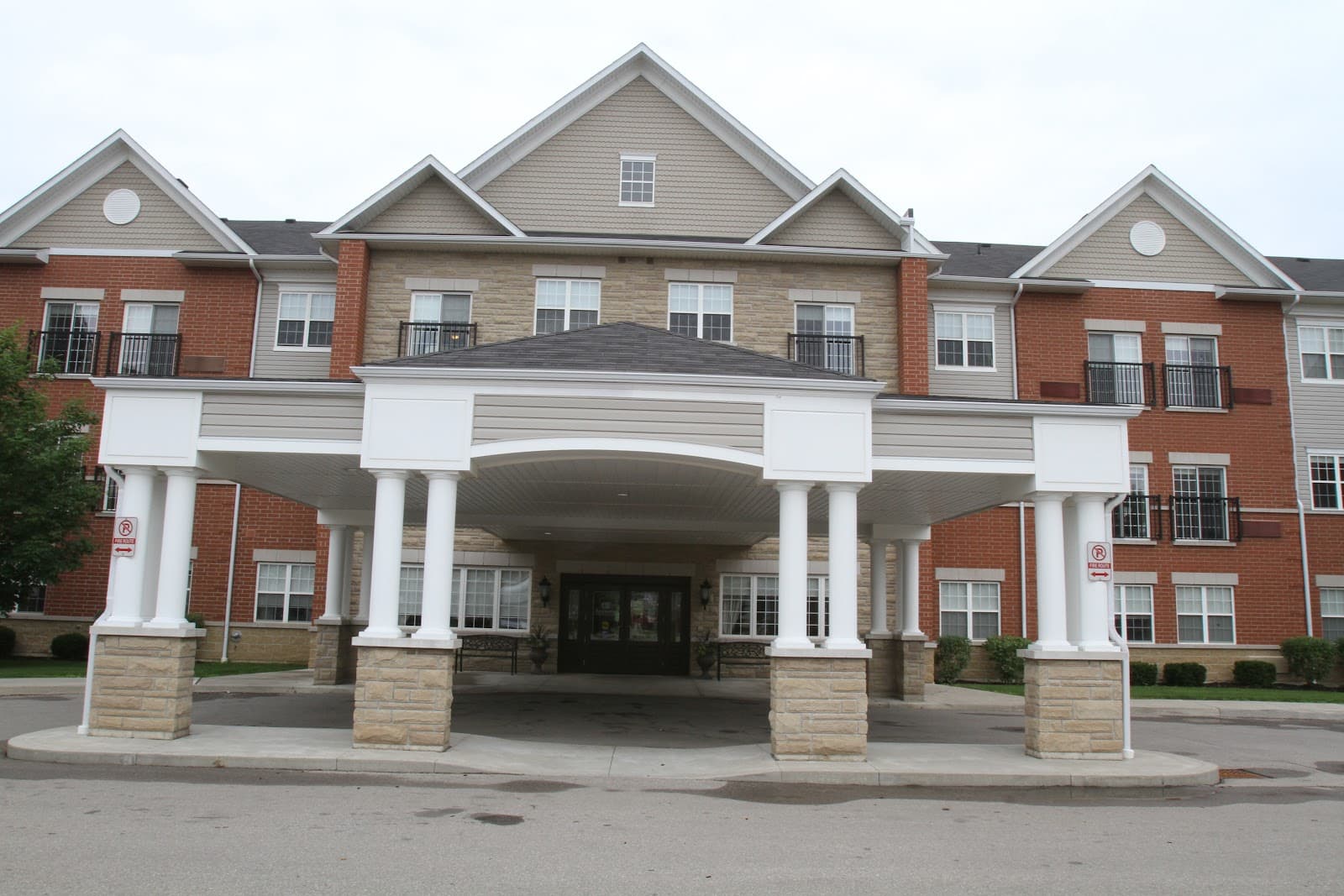
Start with the level of care your parent actually needs today, then leave a little room for what comes next. Memory care means a secured setting with staff trained in dementia, structured routines, and support with daily tasks. If your parent is still largely independent and safety isn't the daily worry, a retirement home or assisted living may fit better for now, and you can move up later. Our advisors usually suggest matching the care level honestly rather than paying for more than needed, but if wandering or nighttime confusion has already started, a secured memory care setting is the safer default.
In Ontario, retirement homes and the memory care they offer are licensed by the Retirement Homes Regulatory Authority (RHRA). That licence is a reasonable baseline to confirm on any tour. Most memory care in Brantford is private-pay, so budget matters early. Monthly rates vary with care level and suite size, and it's worth asking exactly what's included versus billed as extra, since that's where two homes that look similar on paper can differ a lot.
On location, weigh proximity to Brantford General Hospital and to family who'll visit often. Homes near the west end and along the main corridors are easier to reach by car and by nearby bus routes, which matters when you're visiting several times a week. In our experience, secured memory care suites turn over more slowly than general retirement suites, so ask about the waitlist and put your name down before you feel pressure to decide.
Prioritize in this order: care level first, then location and visiting ease, then budget, then availability. The close call families ask about most is in-home care versus a move. Home care can stretch things for a while, but once safety and supervision become around-the-clock needs, a purpose-built memory care home usually gives everyone more peace of mind. The trade-off is real: a move is disruptive and emotional, and it's harder to undo than adding a few more home care hours.