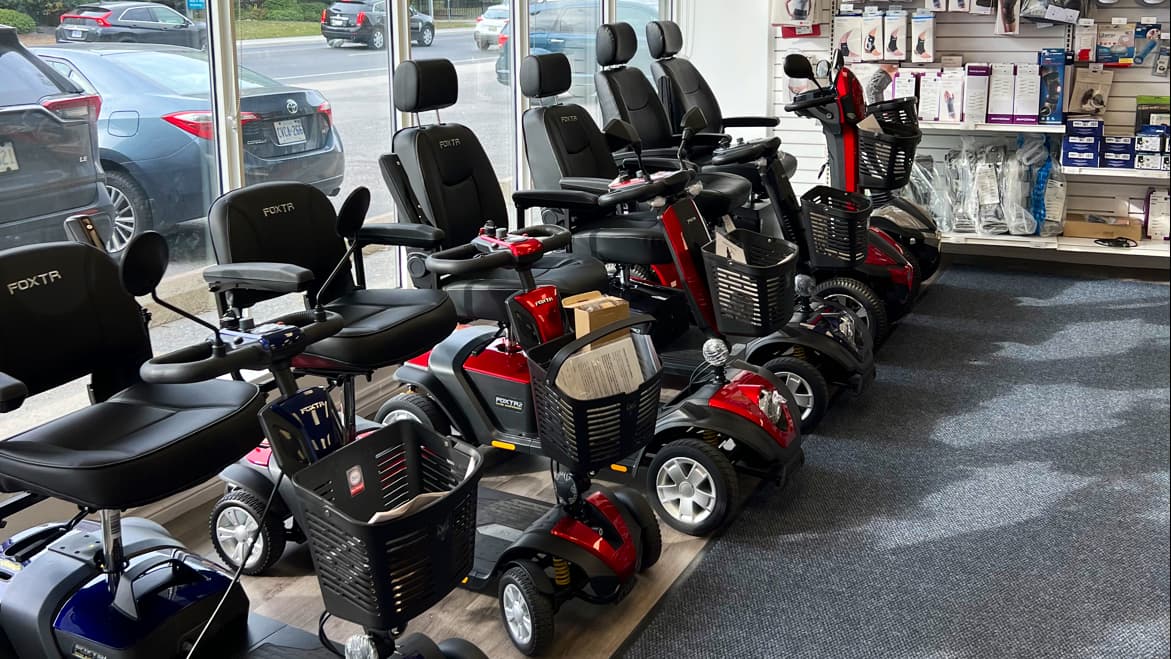
Toronto is a city of contrasts for older housing stock. The east-end Beaches and older Etobicoke neighbourhoods are full of postwar bungalows and two-storey semis where a senior may navigate a narrow hallway, a sunken living room, or a steep staircase just to reach the bathroom. Condos in Midtown and the downtown core present their own challenge: compact floorplans where a transfer board or swivel cushion can make the difference between staying put and moving into a care setting. Our advisors recommend shopping at a retailer that serves both scenarios, because the right transfer aid is almost never the same product twice.
Start by matching the aid to the specific transfer that causes the most difficulty. A sliding board works well for moving from a bed to a wheelchair on a firm, even surface, which many Toronto condos offer. A swivel cushion shines for getting in and out of a car, which matters here given how many families rely on a personal vehicle for trips to appointments across the city or along the Highway 401 corridor. A gait belt or transfer pole is a better fit for a caregiver-assisted transfer in a tighter space, like a postwar bungalow bathroom. Weight capacity and grip texture are non-negotiable checkboxes regardless of which aid you choose.
We lean toward buying from a dedicated assistive-device retailer rather than a general big-box store. Staff at specialty shops can watch how your parent moves, ask about their specific transfers, and recommend the right grip style or board length. That hands-on guidance is worth more than the modest savings at a general retailer, though the trade-off is that specialty shops may carry a narrower range of price points, so budget-conscious families may need to ask specifically about entry-level options.
Toronto winters add one practical note: if your parent is transferring in and out of a car during icy months, look for a swivel cushion with a non-slip base that stays stable on a cold leather seat. Many retailers in the city stock products with Canadian winters in mind. Before you buy, ask about the return and exchange policy, check whether the retailer can order adjusted weight capacities, and confirm they stock replacement parts. Purchases may qualify for the federal Home Accessibility Tax Credit, and provincial assistive-device programs may cover part of the cost, so ask the retailer what documentation they can provide.