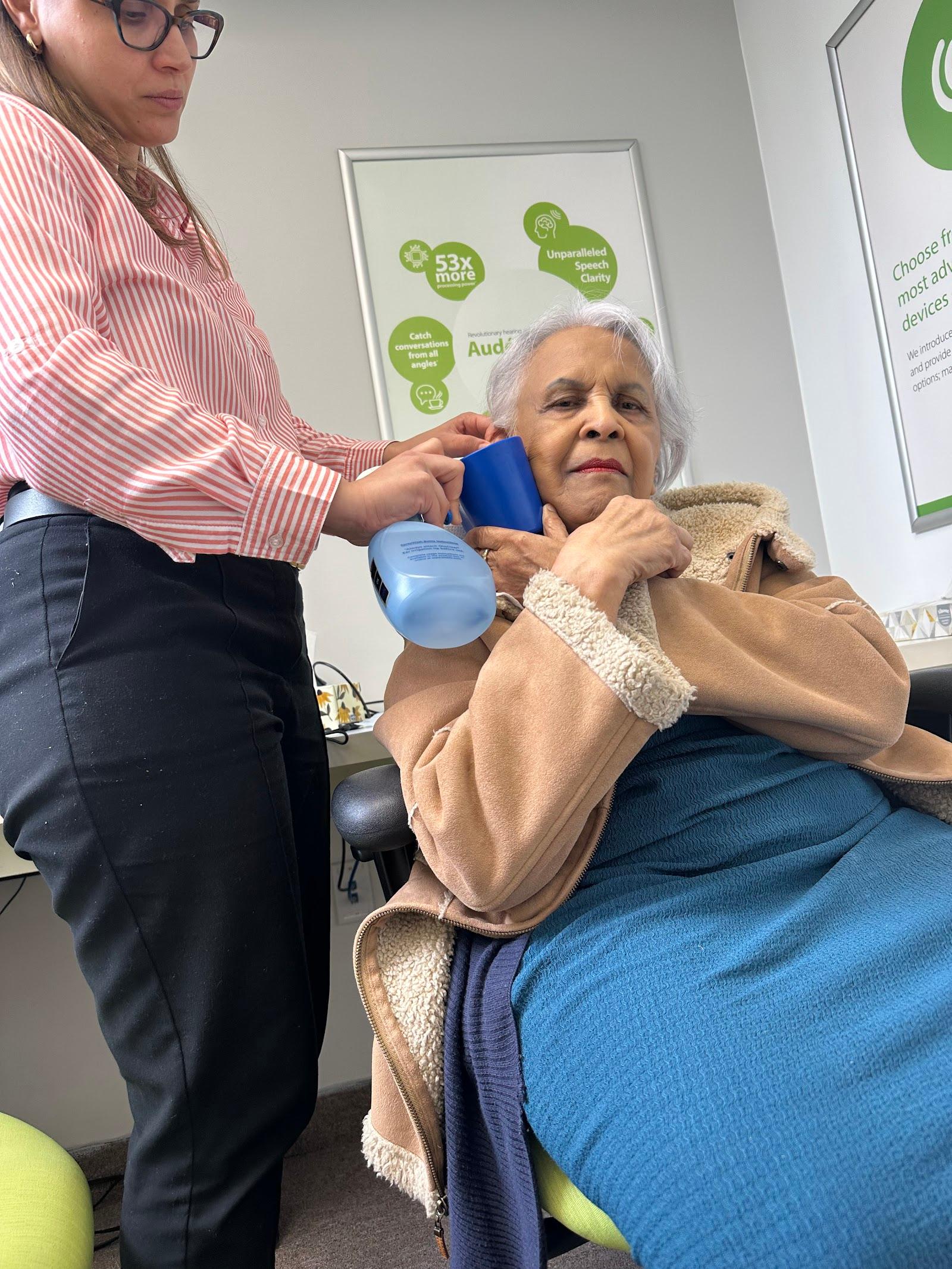
Begin with a full hearing test by an audiologist or a hearing instrument practitioner. Bring someone along, because a familiar voice helps in some parts of the test and a second set of ears helps when the options are explained. Ask what the results mean in plain words, and what a hearing aid can and can't do for that particular kind of loss.
Over-the-counter devices and the tiniest in-canal styles are tempting, especially for a parent worried about looking old. For many seniors, a slightly larger behind-the-ear hearing aid is the better buy: easier to handle with stiff fingers, usually rechargeable, and with room for features like a telecoil or phone streaming. Being able to put it in alone each morning matters far more than being invisible. If your parent wears glasses, try putting both on and taking both off during the fitting, since behind-the-ear tubing can tangle with the arms of the frames.
Mississauga has many clinics with staff who speak languages other than English, and that counts for more than it sounds. Fine-tuning depends on your parent describing what sounds wrong, whether voices are tinny or the dishwasher roars, and that conversation goes much better in their first language. Ask about it when you book the first appointment.
Ask about the trial period, which follow-up visits are included, and the warranty for loss and damage, since aids do get dropped down drains and left in pockets. Hearing aids need regular cleaning, new domes and wax filters, and occasional repairs. Find out whether the clinic lends a spare while yours is away, and how often they'll re-test as hearing changes. Rechargeable models end the fiddly battery swaps but need a nightly docking habit, so pick the routine your parent will actually keep.