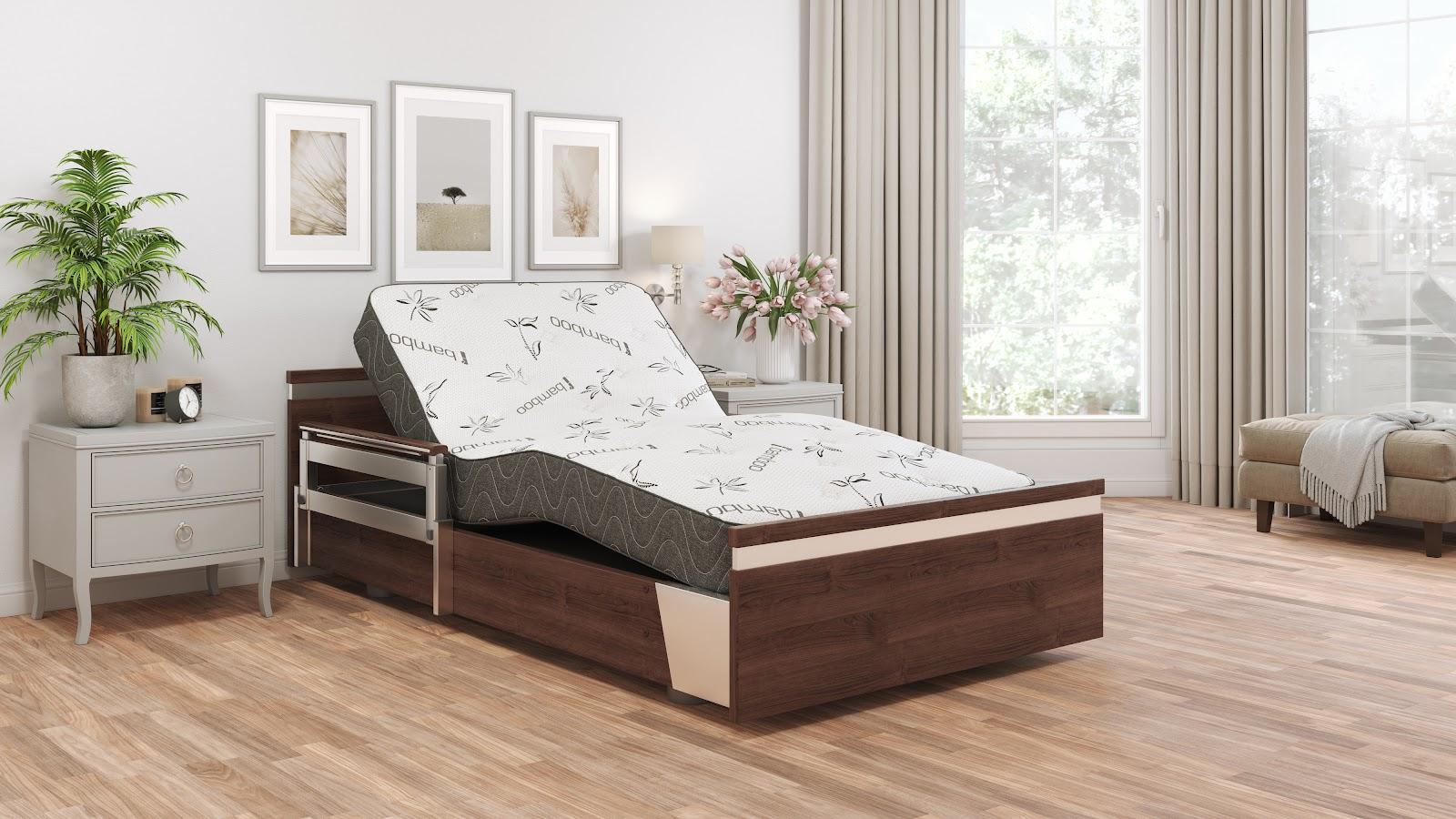
There are two different products sold under one name. A lifestyle adjustable base raises the head and feet and looks like ordinary bedroom furniture. A home-care bed, closer to a hospital bed, also raises and lowers the whole mattress, which is what makes it easier for a caregiver to help and for your parent to get in and out at a safe height. For someone who's still independent, the lifestyle base is often fine. Once a caregiver is helping with transfers or dressing, height adjustment matters more than looks.
Delivery decides more than people expect. In older homes in Old South and Wortley Village, staircases are often narrow and turn near the top, and a queen-size base may not make the corner. A split base, two twin extra-long frames side by side, comes in smaller pieces and lets a couple adjust each side separately. Measure the stairwell, the bedroom door and any tight turn before ordering, and ask whether the store will assemble the bed in the room.
The mistake families make is putting an old spring mattress on a new adjustable base. Many innerspring mattresses aren't designed to bend and wear out quickly or feel lumpy. Ask which mattresses are compatible, and check the base's weight rating for the mattress plus the people on it.
Look for a wireless remote with large buttons and preset positions your parent can find in the dark, and a backup battery that can flatten the bed during a power cut. Ask how the motor warranty works, whether repairs happen at home and how long parts take to arrive.